
 0
0
 0
0
Power cuts still hit many parts of India even after massive growth in electricity generation. Cities deal with peak-hour stress, rural regions face unstable supply, and renewable energy often goes unused because storage infrastructure simply isn’t ready yet. That’s where India’s Energy Storage Challenge becomes impossible to ignore.
Solar plants generate huge amounts of power during the day, but demand spikes at night. Wind energy changes with weather conditions. The grid struggles to balance everything in real time. Batteries are now being pushed as the missing piece that could finally stabilize India’s electricity system.
🔋 Quick Summary
India’s energy demand is rising rapidly, making large-scale electricity storage more important than ever. This guide explains why energy storage matters, the biggest challenges ahead, and the technologies shaping the future.
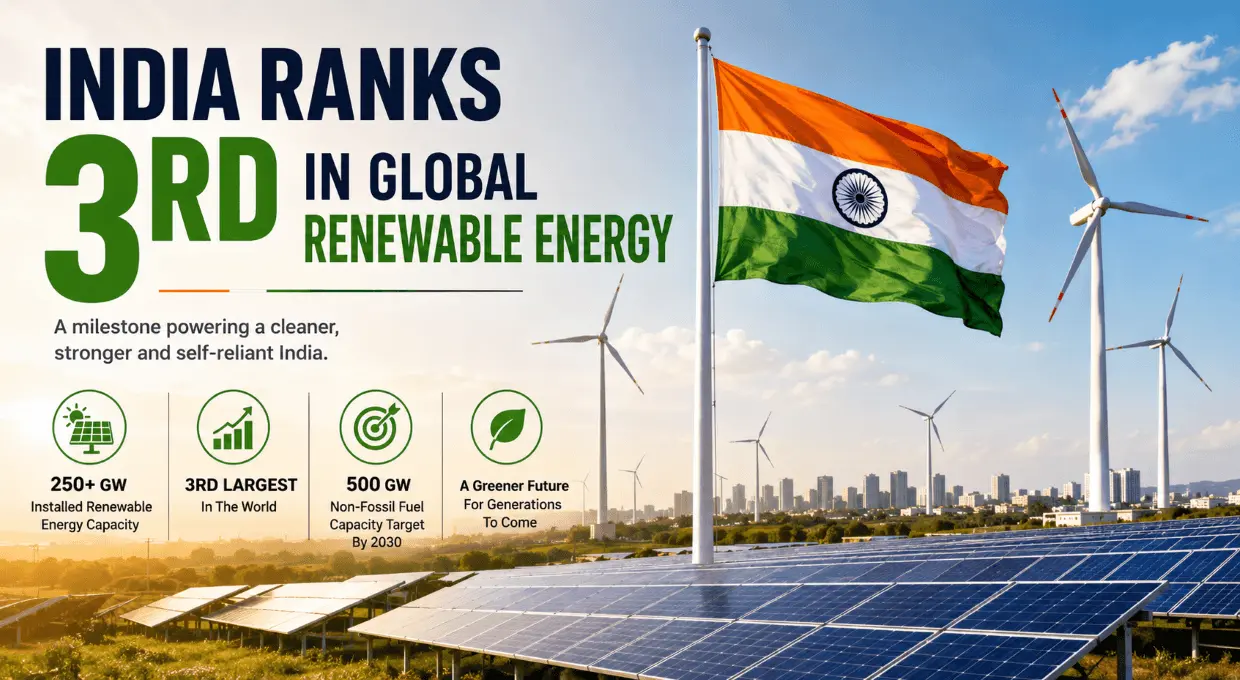
Read Also: India Ranks 3rd in Global Renewable Energy: Why This Milestone Matters More Than People Think
Why India’s Energy Storage Challenge matters So Much
India is expanding renewable energy faster than almost any major economy. Solar parks are growing across states like Rajasthan and Gujarat. Wind projects continue expanding in Tamil Nadu and Karnataka.
The problem starts after electricity generation.
Renewable energy is inconsistent. Solar output crashes after sunset. Wind patterns shift unpredictably. Traditional coal plants still carry most of the burden during high-demand hours.
That creates three major issues:
- Grid instability
- Energy wastage
- Peak-hour shortages
Large amounts of renewable electricity are often “curtailed,” which means the power gets wasted because the grid cannot store or distribute it efficiently.
India’s Energy Storage Challenge sits right at the center of this problem.
Why Batteries Are Suddenly Becoming Critical
Battery Energy Storage Systems (BESS) are no longer experimental projects. Utilities and policymakers now see them as essential infrastructure.
A modern battery storage system can:
✅ Store extra solar electricity during the day
✅ Release power during evening demand spikes
✅ Reduce dependence on diesel generators
✅ Improve grid reliability
✅ Support electric vehicle charging infrastructure
This changes how electricity moves through the system.
Earlier, power generation had to exactly match real-time demand. Batteries create flexibility. Excess energy can finally be saved instead of wasted.
That single shift could transform India’s electricity ecosystem.
The Biggest Electricity Supply Problems India Faces
Peak Demand Pressure
Electricity demand spikes heavily during evenings.
Air conditioners, industrial operations, metro systems, and household usage all rise at nearly the same time. Coal plants often struggle to ramp up quickly enough.
Battery systems can discharge stored energy during those high-pressure windows.
Rural Grid Instability
Many villages still face voltage fluctuations and unreliable supply.
Traditional grid expansion takes years and costs enormous amounts of money. Localized battery-backed solar systems can deliver faster improvements.
A small storage setup combined with rooftop solar often works better than waiting for massive transmission upgrades.
Renewable Energy Waste
This issue rarely gets public attention.
India sometimes produces more renewable electricity than the grid can absorb. Instead of storing it, operators reduce renewable generation output.
That directly slows clean energy progress.
Now here’s where things get more practical.
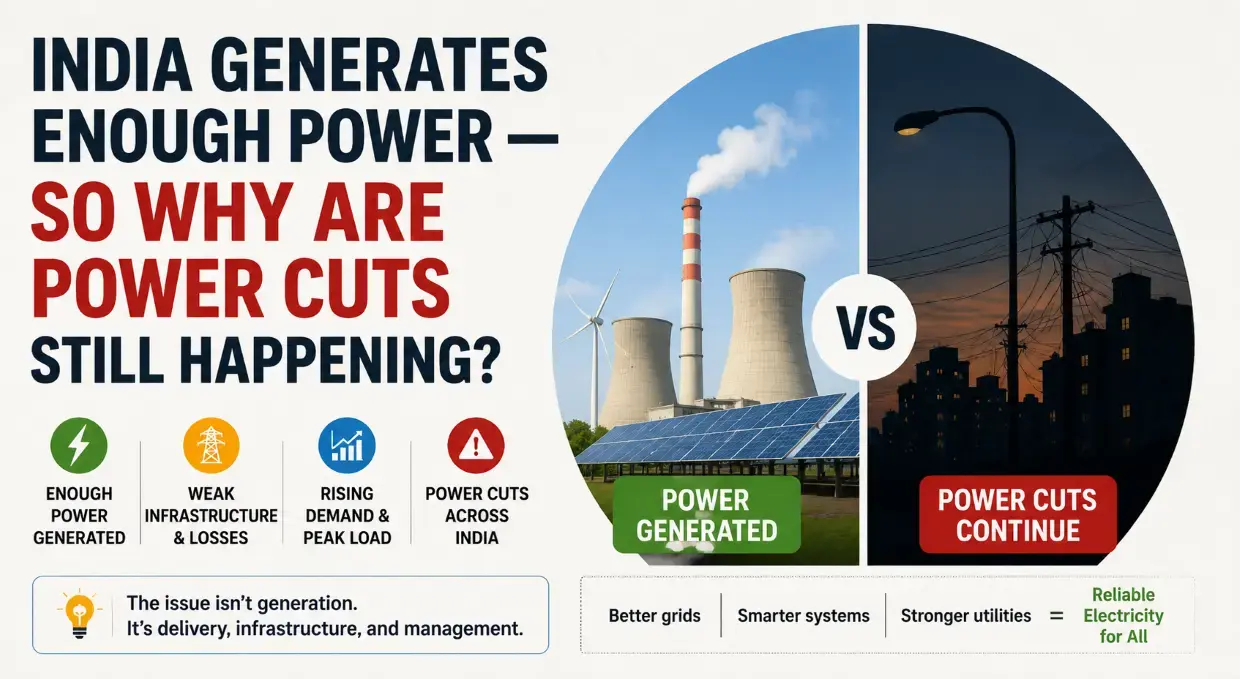
Read Also: India Generates Enough Power — So Why Are Power Cuts Still Happening Across Cities and Villages?
How Battery Storage Actually Works in the Power Grid
Most large-scale systems currently rely on lithium-ion batteries.
The process sounds simple:
- Renewable plants generate electricity
- Extra electricity charges battery systems
- Stored energy gets released later when demand rises
The real advantage comes from speed.
Coal plants take time to adjust output. Batteries respond almost instantly.
That rapid response helps prevent blackouts and frequency instability.
Real-World Example
South Australia faced major grid reliability issues years ago. Large-scale battery projects later improved response times dramatically during outages and peak demand periods.
India is studying similar deployment models for state grids.
Types of Energy Storage India Is Exploring
India’s Energy Storage Challenge will not be solved by one technology alone.
Different situations require different storage solutions.
| Technology | Main Advantage | Big Limitation |
|---|---|---|
| Lithium-Ion Batteries | Fast response and scalability | High raw material dependency |
| Pumped Hydro Storage | Long-duration storage | Requires suitable geography |
| Sodium-Ion Batteries | Potentially lower cost | Still developing commercially |
| Flow Batteries | Long lifecycle | Lower energy density |
The Cost Problem Nobody Can Ignore
Battery projects are still expensive.
Large-scale deployment requires:
- Battery cells
- Cooling systems
- Grid integration equipment
- Land
- Advanced software systems
India also depends heavily on imported lithium and battery materials.
That creates supply chain risks.
China currently dominates much of the global battery manufacturing ecosystem. India wants domestic production growth, but scaling local manufacturing will take time.
Pro Insight:
Battery prices have dropped sharply over the last decade, but storage economics still depend heavily on how often the system gets charged and discharged. Poor utilization can make projects financially weak very quickly.
Government Push Behind Energy Storage Expansion
India’s policymakers already understand the urgency.
Several initiatives now support storage growth:
- Production Linked Incentive (PLI) schemes
- Renewable-plus-storage tenders
- Grid modernization projects
- Battery manufacturing incentives
State utilities are also experimenting with battery integration.
The Central Electricity Authority projects massive storage requirements by 2030 because renewable capacity targets keep rising aggressively.
Without storage, renewable expansion eventually hits a wall.
Can Batteries Completely Replace Coal Plants?
Not yet. That assumption creates unrealistic expectations.
Battery systems work extremely well for short-duration balancing and peak demand management. Long-duration backup remains more difficult and expensive.
Coal plants still provide:
- Baseload stability
- Long continuous output
- Large-scale industrial reliability
India’s transition will likely remain hybrid for many years.
Decision Guide
| Situation | Coal Plants | Battery Storage |
|---|---|---|
| Peak demand management | Slower response | Very effective |
| 24-hour continuous power | Strong capability | Limited currently |
| Renewable energy integration | Less flexible | Highly effective |
| Carbon emissions | High | Low operational emissions |
Hidden Challenges Slowing Battery Adoption
Recycling Infrastructure Is Weak
Battery disposal could become a major environmental issue later.
India still lacks mature large-scale battery recycling systems.
That gap could create future waste management problems if ignored now.
Extreme Weather Conditions
Indian summers are brutal on battery systems.
High temperatures reduce battery lifespan and efficiency. Cooling infrastructure becomes critical in many regions.
Financing Risks
Many energy storage projects require heavy upfront investment.
Private investors often worry about uncertain returns because electricity pricing structures continue evolving.
Now the conversation becomes more interesting.
Could India Leapfrog Into a Storage-First Energy Model?
There’s a strong possibility.
India skipped certain legacy infrastructure phases in telecom and digital payments. Energy storage could follow a similar pattern in some regions.
Distributed battery systems may eventually support:
- Apartment complexes
- Factories
- EV charging hubs
- Rural microgrids
- Commercial buildings
The model becomes even stronger when paired with rooftop solar.
A factory storing daytime solar energy for nighttime operations could dramatically reduce grid dependency.
That shift would reshape industrial energy economics.
🧠 Pro Insight
The biggest long-term winners may not be battery manufacturers alone. Software platforms that manage energy flow optimization, grid balancing, and real-time electricity distribution could become just as important over the next decade.
What the Next 10 Years Could Look Like
India’s Energy Storage Challenge will likely define the country’s clean energy transition more than solar panel installation itself.
Several trends are already becoming visible:
- Battery costs gradually falling
- Renewable-plus-storage projects increasing
- Grid digitization expanding
- EV ecosystem growth accelerating storage demand
- Domestic manufacturing receiving stronger policy support
The pace still depends on economics.
Cheap storage changes everything.
Expensive storage slows adoption dramatically.
That single factor may decide how quickly India reduces coal dependence while maintaining reliable electricity access.
India’s electricity future will not depend only on producing more power. The bigger challenge involves storing energy intelligently, distributing it efficiently, and keeping the grid stable during rapid renewable expansion.
Battery technology alone will not magically solve every electricity problem overnight. Still, without large-scale energy storage, India’s clean energy ambitions become much harder to achieve.
FAQ Section: India’s Energy Storage Challenge
What is India’s Energy Storage Challenge?
India’s Energy Storage Challenge refers to the country’s struggle to store electricity efficiently while expanding renewable energy capacity. Solar and wind power generation fluctuate throughout the day, but electricity demand remains constant. Storage systems help balance that mismatch.
Why does India need battery energy storage systems?
Battery systems help stabilize the grid during high-demand periods and renewable energy fluctuations. They also reduce electricity wastage from excess solar or wind generation.
Key benefits include:
- Faster grid response
- Better renewable integration
- Reduced blackout risks
- Lower diesel generator dependence
- Improved rural electricity reliability
Can batteries completely solve India’s electricity supply problems?
Not entirely. Battery storage can significantly improve grid stability and renewable energy usage, but coal and hydro power still play major roles in providing long-duration electricity supply.
India will likely use a hybrid energy model for many years.
Which battery technology is most common in India?
Lithium-ion batteries currently dominate the market because they offer:
✓ Fast charging
✓ High efficiency
✓ Compact size
✓ Strong commercial availability
Large-scale grid projects and electric vehicles mainly rely on lithium-ion technology today.
What are the biggest problems with battery storage in India?
Several challenges still slow adoption:
- High installation costs
- Dependence on imported raw materials
- Limited recycling infrastructure
- Extreme heat affecting battery lifespan
- Financing uncertainty for large projects
These issues directly impact the growth of energy storage infrastructure.
How does battery storage support renewable energy?
Solar plants generate maximum electricity during daytime hours, while electricity demand often peaks in the evening.
Battery systems store extra daytime electricity and release it later when demand rises. That reduces renewable energy wastage and improves grid efficiency.
What is a Battery Energy Storage System (BESS)?
A Battery Energy Storage System, commonly called BESS, stores electricity for later use.
The system usually includes:
- Battery cells
- Cooling systems
- Energy management software
- Power conversion equipment
Utilities use BESS projects to stabilize power supply and manage peak demand.
Is India investing heavily in energy storage?
Yes.
India has already launched multiple initiatives supporting storage growth, including:
- PLI schemes for battery manufacturing
- Renewable-plus-storage tenders
- Grid modernization programs
- Domestic cell manufacturing incentives
The government sees storage as essential for future renewable energy expansion.
Which states in India are leading renewable and storage adoption?
Several states are moving aggressively toward renewable integration and storage deployment.
Major leaders include:
- Gujarat
- Rajasthan
- Tamil Nadu
- Karnataka
- Maharashtra
These regions already host large solar and wind energy projects.
How expensive are battery storage systems in India?
Costs vary depending on:
- Storage duration
- Battery chemistry
- Grid integration complexity
- Project scale
Large utility-scale battery projects still require major investment, though prices have declined steadily over the last decade.
Can energy storage help rural India?
Yes, especially in areas with unstable electricity supply.
Small solar-plus-storage systems can support:
- Villages
- Schools
- Health centers
- Agricultural operations
- Small businesses
Localized storage solutions often work faster than traditional grid expansion projects.
What role will electric vehicles play in India’s Energy Storage Challenge?
Electric vehicle growth will increase battery demand dramatically.
That creates two major effects:
- Stronger domestic battery manufacturing ecosystem
- More innovation in energy storage technologies
EV battery infrastructure may eventually support grid storage applications as well.
Is pumped hydro storage better than batteries?
Both technologies serve different purposes.
Pumped hydro works well for long-duration storage but requires suitable geography and large infrastructure investments.
Batteries offer:
- Faster deployment
- Quicker response times
- Better flexibility for urban and distributed applications
India will likely use both technologies together.
Will battery prices become cheaper in the future?
Most experts expect battery prices to continue falling gradually due to:
- Manufacturing scale improvements
- Better battery chemistry
- Increased competition
- Supply chain expansion
Cheaper batteries could accelerate India’s clean energy transition significantly.
Why is India’s Energy Storage Challenge important for climate goals?
Renewable energy expansion alone is not enough.
Without energy storage, solar and wind power cannot reliably support large-scale electricity demand. Storage systems improve renewable adoption while reducing dependence on fossil fuels.
That makes India’s Energy Storage Challenge central to both energy security and climate targets.