
 0
0
 0
0
A few years ago, India’s renewable energy push felt ambitious but distant. Solar panels were growing, wind farms were expanding, yet most people still assumed countries like Germany or Japan were far ahead.
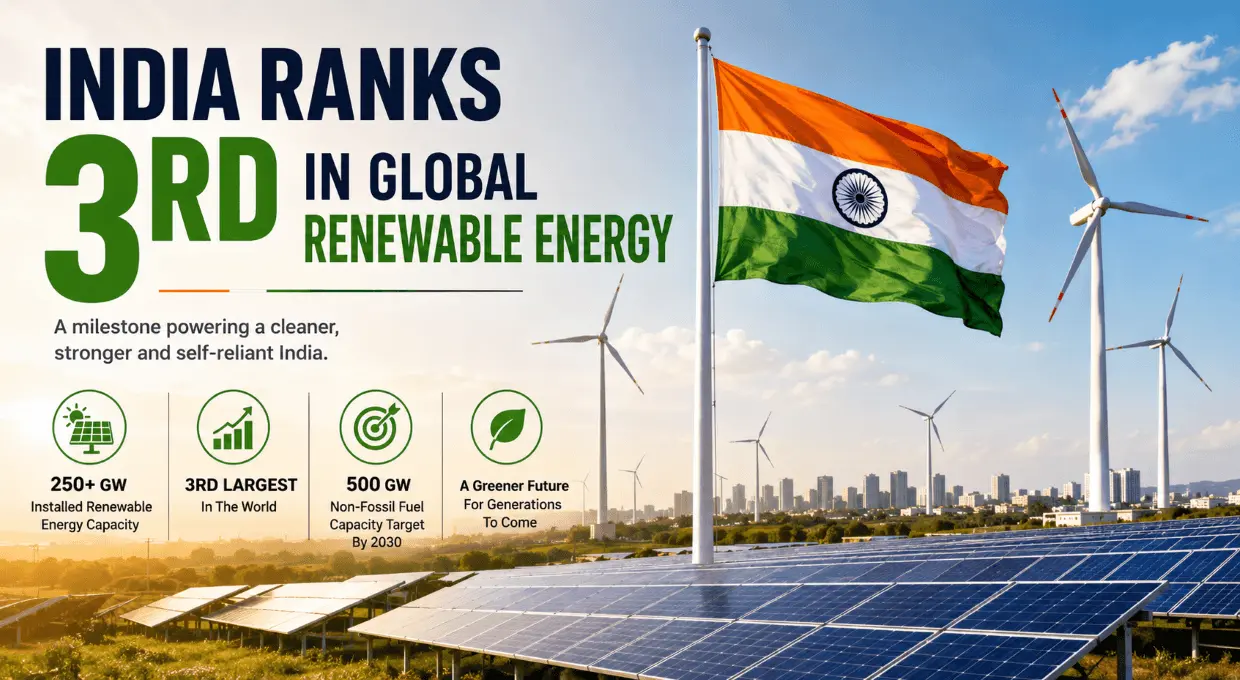
Now the conversation has changed completely. India ranks 3rd in global renewable energy capacity, and this isn’t just another government headline. It signals a major shift in how the country generates power, attracts investment, and plans its economic future.
Clean energy is no longer a side project. It’s becoming central to India’s growth story.
🌱 Quick Summary
India has become one of the world’s fastest-growing renewable energy markets. This guide explains what is driving that growth, the challenges ahead, and what it means for the future.
How India Reached 3rd Position in Renewable Energy
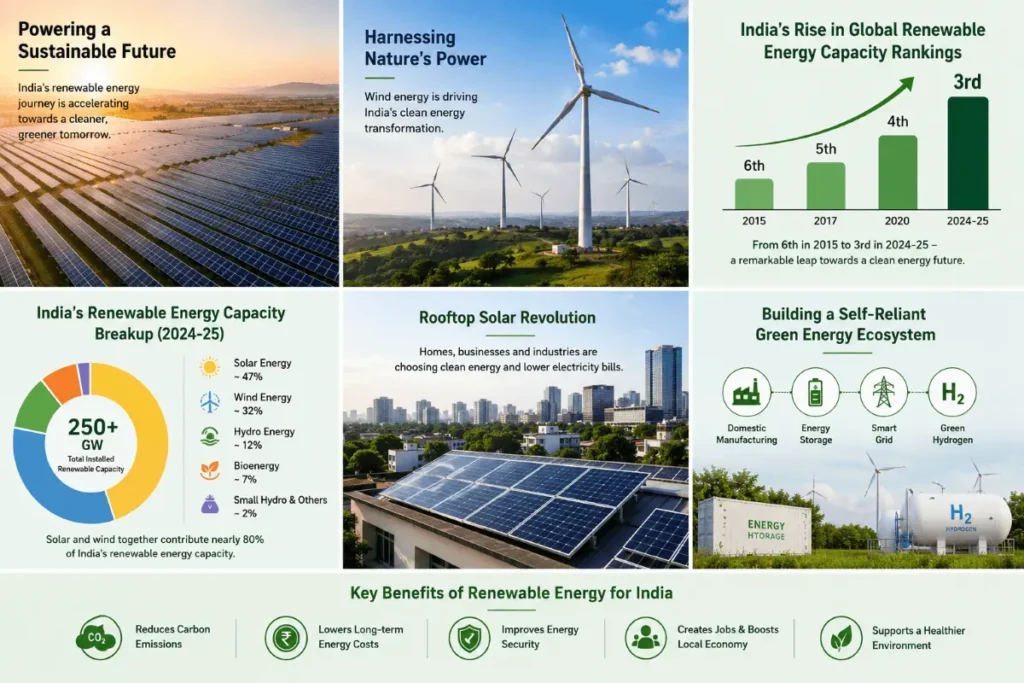
India Ranks 3rd in Global Renewable Energy. But that expansion didn’t happen overnight. Several large policy decisions, infrastructure investments, and falling solar costs pushed the country forward faster than expected.
Solar energy played the biggest role.
Massive solar parks across Rajasthan and Gujarat changed the scale completely. Rooftop solar adoption also increased because electricity prices kept rising for commercial users.
Wind energy contributed too, especially in states like Tamil Nadu and Karnataka. The combination of solar and wind helped India move past several developed nations in installed renewable capacity.
Government targets also created momentum. Investors usually avoid uncertainty, but India’s long-term renewable commitments gave global companies confidence to invest heavily.
Why Solar Energy Became India’s Biggest Advantage
Most countries trying to scale renewable energy struggle with land, weather, or costs. India has one huge advantage: sunlight availability across large regions.
That changed the economics completely.
A decade ago, solar power looked expensive. Today, solar tariffs in India are among the cheapest globally. Large-scale production and competitive bidding helped reduce prices dramatically.
Several businesses now prefer solar because it cuts long-term electricity costs.
States Leading India’s Solar Growth
Some states moved much faster than others:
- Rajasthan
- Gujarat
- Karnataka
- Tamil Nadu
- Maharashtra
These regions invested heavily in transmission infrastructure and land allocation for renewable projects.
Rooftop Solar Is Quietly Changing Urban India
Factories, malls, schools, and even apartment complexes are adopting rooftop systems faster than expected.
One practical reason stands out: electricity bills.
A medium-sized commercial building can recover installation costs within a few years. After that, energy savings become substantial.
That financial logic matters more than environmental messaging for many businesses.
India’s Renewable Energy Growth vs Traditional Power
Coal still dominates India’s electricity generation, but the gap is slowly narrowing.
| Energy Source | Traditional Fossil Fuel | Renewable Energy |
|---|---|---|
| Fuel Cost | High & Volatile | Low After Setup |
| Pollution | Very High | Minimal |
| Long-Term Sustainability | Limited | Strong |
| Import Dependency | High | Lower |
One interesting detail often gets ignored.
India isn’t abandoning coal immediately. The country still needs stable electricity for industries and rapidly growing cities. Renewable energy growth is happening alongside conventional power expansion, not as a total replacement yet.
That balance is important.
The Real Economic Impact of Renewable Energy Expansion
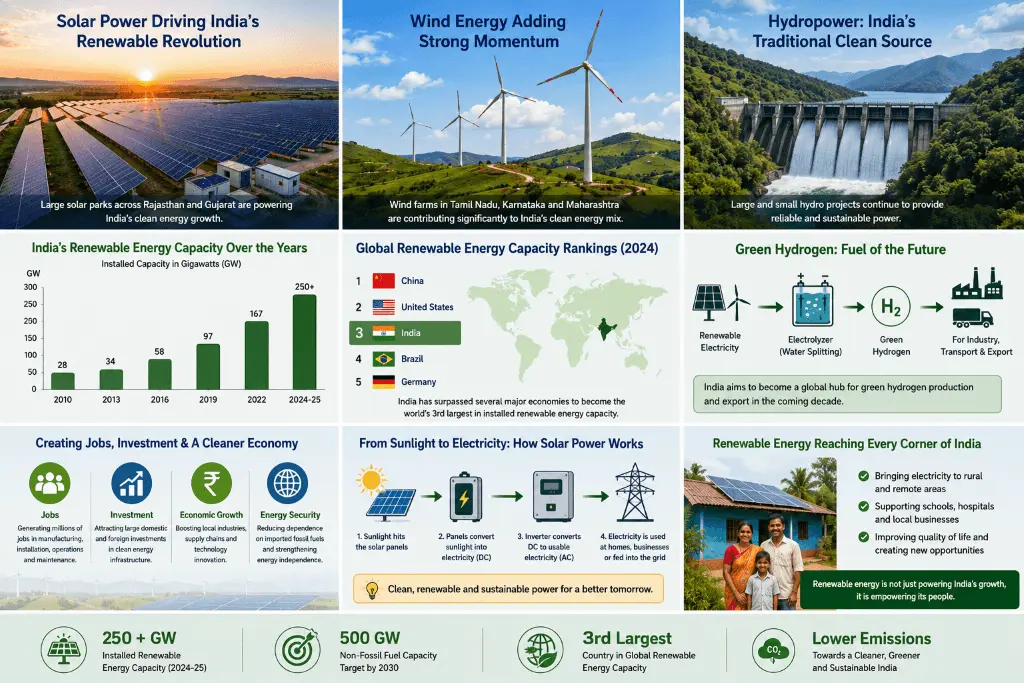
The environmental benefits get most of the attention, but the economic angle may be even bigger.
Renewable energy is creating:
- Manufacturing opportunities
- Infrastructure jobs
- Foreign investment
- Local supply chains
- Technology partnerships
Several global companies now see India as a major clean energy market rather than just a developing economy.
Battery storage and green hydrogen are attracting attention too.
Green Hydrogen Could Become India’s Next Big Move
Solar and wind helped India reach 3rd place in global renewable energy capacity. Green hydrogen could push the country even further.
Heavy industries like steel and shipping need cleaner fuel alternatives. Hydrogen projects are now receiving major investment support because they could reduce industrial emissions significantly.
India wants to become both a consumer and exporter of green hydrogen in the future.
That strategy could reshape energy trade globally.
Now here’s where things get more practical.
Challenges India Still Needs to Solve
Big rankings sound impressive, but several structural problems remain.
Grid Infrastructure Is Under Pressure
Renewable energy generation depends heavily on weather conditions. Solar output changes during cloudy days. Wind energy fluctuates seasonally.
The electricity grid needs modernization to manage these variations efficiently.
Battery storage systems will become critical over the next few years.
Land Acquisition Remains Difficult
Large solar projects require enormous land areas.
Local disputes, environmental concerns, and compensation issues sometimes slow down projects. Several renewable plans face delays because approvals take too long.
Manufacturing Dependency on Imports
India produces solar panels domestically, but China still dominates large parts of the global solar supply chain.
That creates strategic risks.
Domestic manufacturing expansion is becoming a national priority because energy security now matters as much as energy production.
Read Also: 9 advantages of renewable energy: How Green energy fights climate change
Decision Guide: Is India Ready to Lead Global Clean Energy?
| Factor | Positive Signal | Current Limitation |
|---|---|---|
| Solar Expansion | Fastest growth sector | Storage challenges |
| Foreign Investment | Strong investor interest | Policy consistency needed |
| Manufacturing | Growing domestic production | Import dependency remains |
| Energy Demand | Massive market opportunity | Coal still heavily used |
Practical Benefits for Ordinary Indians
Most people hear “renewable energy” and think only about climate change. The daily impact is broader than that.
Renewable expansion can help reduce:
- Long-term electricity costs
- Fuel import dependency
- Air pollution levels
- Power shortages in some regions
Rural electrification projects are improving too because solar installations can reach remote areas faster than traditional grid expansion in certain cases.
Read Also: Are Rare Earth Elements (REEs) the Future of Clean Energy?
🧠 Pro Insight
Countries that build strong clean energy infrastructure early often gain major manufacturing advantages later. China already demonstrated this through its dominance in solar panel and battery production. India is now accelerating renewable energy investments to avoid missing the same long-term industrial opportunity.
Why Global Investors Are Watching India Closely
International investment firms now consider India one of the most important renewable energy markets globally.
Three reasons stand out:
- Massive population and energy demand
- Strong long-term government targets
- Falling renewable energy costs
Several multinational companies are committing billions toward renewable infrastructure, battery systems, and green manufacturing facilities.
That trend will likely continue throughout this decade.
Read Also: Mind-Blowing Portable Solar Systems on Trains: The Future Hack for City Lights!
A Contrarian Reality Most Headlines Ignore
Renewable energy growth alone won’t solve India’s pollution problems immediately.
Transport emissions, construction dust, industrial waste, and urban congestion still contribute heavily to air quality issues.
Clean energy is a major piece of the solution, but not the entire answer.
That nuance often disappears in celebratory headlines.
Final Thoughts
India Ranks 3rd in Global Renewable Energy capacity represents more than a symbolic achievement. It shows how quickly energy priorities can shift when economics, policy, and technology align together.
The next phase will matter even more.
Building renewable projects is one challenge. Creating a stable, scalable, and self-reliant clean energy ecosystem is far more difficult. Countries that solve that problem early could dominate the next generation of global industry.
India now has a serious chance to become one of them.
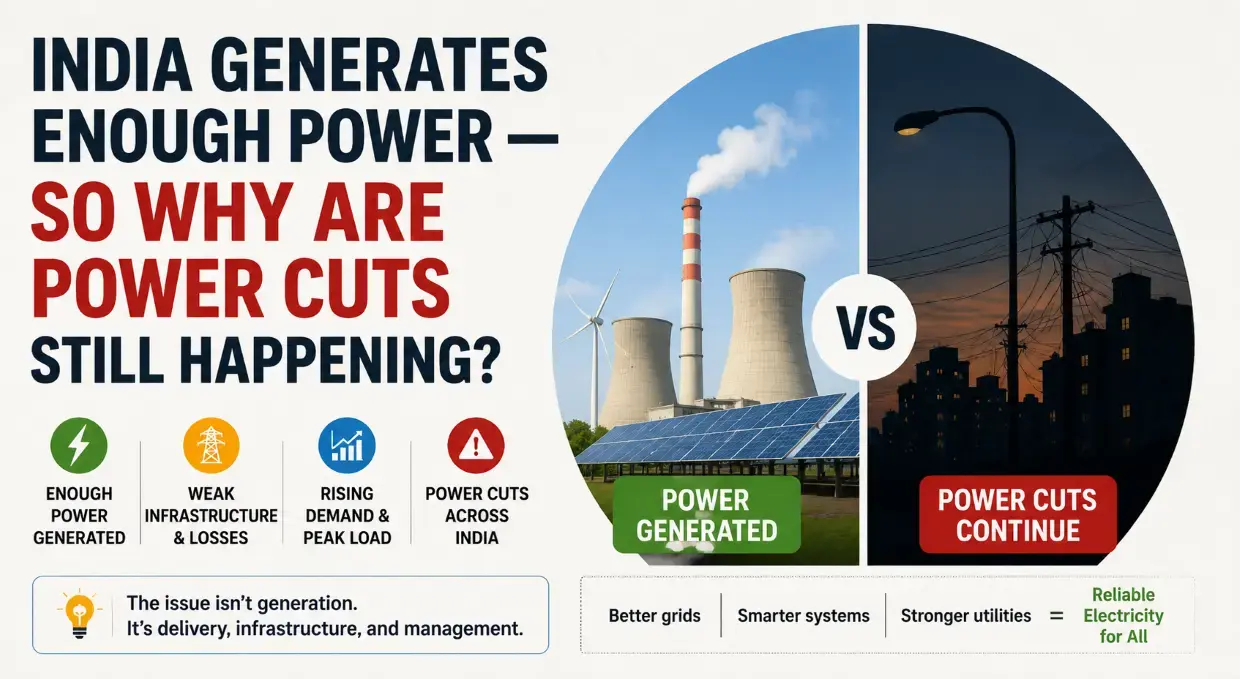
Read Also: India Generates Enough Power — So Why Are Power Cuts Still Happening Across Cities and Villages?
FAQ: India Ranks 3rd in Global Renewable Energy
Why does India rank 3rd in global renewable energy capacity?
India ranks 3rd in global renewable energy capacity because of rapid expansion in solar and wind energy projects. Large government-backed investments, cheaper solar power production, and strong private sector participation helped India move ahead of several developed countries.
Solar energy contributed the most to this growth.
Which renewable energy source is growing fastest in India?
Solar energy is currently the fastest-growing renewable energy source in India.
Massive solar parks in Rajasthan and Gujarat, along with increasing rooftop solar installations in cities, pushed solar capacity growth at a very high pace over the last few years.
Wind energy is also growing steadily, especially in southern states.
What is India’s renewable energy target for 2030?
India aims to achieve 500 GW of non-fossil fuel energy capacity by 2030.
That target includes:
- Solar energy
- Wind energy
- Hydro power
- Nuclear energy
- Green hydrogen infrastructure
The goal is part of India’s long-term clean energy transition strategy.
How does renewable energy help India economically?
Renewable energy helps India reduce dependence on imported fossil fuels, especially coal and oil.
The sector also creates:
- Manufacturing jobs
- Infrastructure investment
- Technology partnerships
- Local business opportunities
Several global companies are now investing heavily in India’s clean energy ecosystem.
Which Indian states lead renewable energy production?
A few states dominate renewable energy generation in India:
- Rajasthan
- Gujarat
- Tamil Nadu
- Karnataka
- Maharashtra
These states invested heavily in solar parks, wind farms, and electricity transmission infrastructure.
Is renewable energy cheaper than coal in India?
In many cases, yes.
Large-scale solar energy projects in India now produce electricity at extremely competitive prices. Solar tariffs have dropped significantly over the last decade.
Coal still plays a major role because it provides stable base-load power, but renewable energy is becoming more cost-effective for long-term expansion.
What challenges does India face in renewable energy expansion?
Several major challenges still exist:
✓ Grid modernization
✓ Battery storage development
✓ Land acquisition issues
✓ Domestic solar manufacturing growth
✓ Managing power supply fluctuations
Electricity storage infrastructure will become especially important as renewable energy usage increases.
What is green hydrogen and why is India investing in it?
Green hydrogen is hydrogen produced using renewable electricity instead of fossil fuels.
India sees green hydrogen as a future fuel source for industries like:
- Steel manufacturing
- Shipping
- Heavy transport
- Chemical production
The government wants India to become a major global producer and exporter of green hydrogen over the next decade.
Can renewable energy fully replace coal in India?
Not immediately.
India’s electricity demand is massive and still growing rapidly. Coal remains important for stable power generation.
Renewable energy will likely grow alongside traditional energy sources for several years before coal dependency gradually declines.
How does renewable energy affect ordinary people in India?
The impact is becoming more visible each year.
Renewable energy expansion can help:
- Lower electricity costs over time
- Improve rural electrification
- Reduce air pollution
- Increase energy security
- Support local job creation
Commercial buildings and households adopting rooftop solar systems are already seeing long-term savings.
Why are global investors interested in India’s renewable energy sector?
India offers one of the world’s largest clean energy growth opportunities because of:
- Huge electricity demand
- Strong government targets
- Rapid infrastructure expansion
- Falling renewable technology costs
International investors see India as a long-term renewable energy market with massive scale potential.
Will India become a global clean energy leader?
India already plays a major role in the global clean energy transition.
The next stage depends on how effectively the country improves:
- Battery storage
- Manufacturing independence
- Power grid infrastructure
- Clean technology innovation
Strong progress in these areas could make India one of the world’s most influential renewable energy economies.