Walk into any hardware shop and you will see the same two choices sitting next to each other on the shelf. A regular bulb for thirty or forty rupees, and a smart bulb that can cost ten times that. It is natural to look at that price gap and wonder if smart lighting is worth it or just another gadget trend.
Here is the short answer before we get into the numbers. A smart bulb usually costs more on day one, but it earns that money back through lower power bills and a much longer life, and for most homes that payback happens faster than people expect. Let’s break down exactly how.
Upfront Cost Comparison
This is where traditional lighting looks like the obvious winner, at least at first glance.
An incandescent bulb is the cheapest thing you can buy for a light fixture. A CFL costs a bit more but still stays light on the pocket. A smart bulb sits in a different price bracket altogether, and if it needs a separate hub or bridge to work, that adds another one time cost on top.
| Bulb type | Typical price per bulb | Extra hardware needed |
|---|---|---|
| Incandescent | ₹30 to ₹60 | None |
| CFL | ₹80 to ₹150 | None |
| Basic Wi-Fi smart bulb | ₹400 to ₹800 | None (works over home Wi-Fi) |
| Zigbee or hub based smart bulb | ₹700 to ₹1500 | Hub or bridge, ₹1500 to ₹3000 |
| Premium smart bulb with color and effects | ₹1200 to ₹3000+ | Sometimes a hub |
If you just want basic on and off control with an app, a Wi-Fi bulb is enough and skips the hub cost entirely. Hubs are mainly needed when you want a large setup with many bulbs, faster response times, or if you’re mixing in other smart devices like switches and sensors.
The point to notice here is that not all smart bulbs need extra hardware. That single choice, Wi-Fi versus hub based, can change your total setup cost by a couple of thousand rupees before you even get to running costs.
The Energy Math (Wattage, kWh, Lumens Explained)
Before comparing bills, it helps to understand three simple ideas that most articles either skip or explain in a confusing way.
Watts tell you how much power a bulb draws while it is switched on. A 60 watt incandescent bulb pulls 60 watts every single hour it stays lit, whether you need that much light or not.
Kilowatt hour, written as kWh, is the unit your electricity bill actually charges you for. One kWh means using 1000 watts of power for one hour. So a 60 watt bulb running for one hour uses 0.06 kWh, and running for ten hours uses 0.6 kWh.
Lumens measure the actual brightness you get, and this is the number that really matters for comparison. It makes no sense to compare two bulbs by watts alone if one is far brighter than the other. The fair way to compare is to look at how many lumens each bulb gives you per watt it uses.
A standard 60 watt incandescent bulb gives out roughly 800 lumens. A smart LED bulb can produce that same 800 to 1000 lumens using only 9 to 10 watts. That is the entire secret behind the savings. You get the same amount of light using a sixth of the power.
Here is what that looks like over a normal day of use.
| 60W Incandescent | 10W Smart LED | |
|---|---|---|
| Brightness | ~800 lumens | ~900 lumens |
| Power draw | 60 watts | 10 watts |
| Hours used per day | 5 hours | 5 hours |
| Energy used per day | 0.30 kWh | 0.05 kWh |
| Energy used per month | 9 kWh | 1.5 kWh |
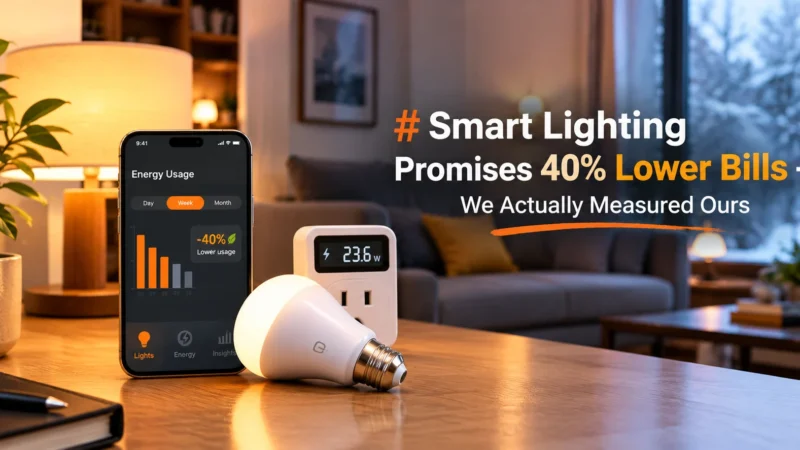
The smart bulb uses about 83 percent less energy for the same job, every single day, without you having to think about it or change your habits at all.
Real Electricity Bill Savings
Now let’s put an actual rupee value on that gap, since most guides stop at percentages and never show real bills.
Household electricity in India generally falls somewhere between ₹6 and ₹9 per unit depending on your state and your usage slab, and bills tend to climb sharply once you cross certain limits. We’ll use ₹7 per unit as a middle ground for this example.
Using the numbers from above, for one single bulb used 5 hours a day:
| 60W Incandescent | 10W Smart LED | |
|---|---|---|
| Monthly energy use | 9 kWh | 1.5 kWh |
| Monthly cost at ₹7/unit | ₹63 | ₹10.50 |
| Yearly cost | ₹756 | ₹126 |
| Yearly saving per bulb | ₹630 |
One bulb alone will not change your life, but very few homes run just one bulb. A typical Indian home with say 10 bulbs running similar hours would save around ₹6,300 a year on the electricity bill alone, just by switching from incandescent to smart LED. Homes still using a mix of old CFLs will see a smaller but still worthwhile saving, since CFLs are already fairly efficient compared to incandescent bulbs.
If your home uses higher usage slabs where per unit rates jump up, the saving works out even bigger, since every kWh you avoid using keeps you further away from the costlier slab.
Lifespan & Replacement Cost
Price per bulb only tells half the story. How long that bulb lasts before it needs replacing matters just as much, and this is the part people tend to forget while comparing prices in the shop.
With regular daily use of around 3 to 4 hours, here is roughly how long each type survives.
| Bulb type | Average lifespan | Roughly how long that lasts |
|---|---|---|
| Incandescent | 1,000 hours | About 1 year |
| CFL | 8,000 to 10,000 hours | 5 to 8 years |
| Smart LED | 15,000 to 30,000 hours | 15 to 25 years |
An incandescent bulb needs replacing almost every year. Over a fifteen year period you might buy that same bulb fifteen times, and each time you’re paying for the bulb, plus the small hassle of remembering to buy and change it. A smart LED bought today could genuinely still be working when your child finishes school.
This changes the entire cost picture once you stretch it out over a few years. Add up the price of the bulb, replacement bulbs bought over time, and the electricity used, and the smart LED comes out well ahead despite the bigger price tag at the start. The incandescent bulb keeps costing you in small amounts, again and again, in a way that is easy to miss because it never feels like one big expense.
Hidden Savings — Automation, Scheduling & Motion Sensors
Everything we calculated so far assumes you remember to switch off the light when you leave a room. In real life, nobody is that disciplined. Lights get left on in empty rooms, in bathrooms, in hallways, sometimes for hours before someone notices.
This is where smart lighting quietly saves more money than the wattage numbers alone show.
A motion or occupancy sensor turns the light on when someone walks in and off a minute or two after they leave. In rooms that people walk in and out of all day, like a kitchen, a store room, or a corridor, this alone can cut lighting hours by a third or more, simply because the light is never burning for an empty room.
Scheduling does something similar for outdoor lights and porch lights. Instead of a light staying on all night, it can switch on at dusk and off at a set time, or only during the hours you actually need it. No more porch lights burning through the afternoon because someone forgot to flip the switch that morning.
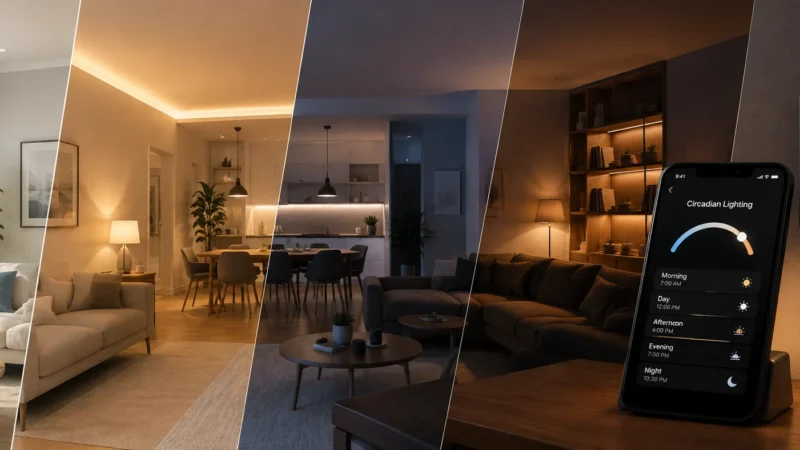
Dimming adds another layer of saving that traditional bulbs simply cannot offer. A light dimmed to 60 percent brightness does not use 60 percent of the power, it usually uses even less than that, since LEDs draw power roughly in line with the brightness level you set. Evening reading light, background ambience, late night bathroom trips, none of these need full brightness, and dimming lets you use only what the moment actually calls for.
None of this shows up if you only compare wattage on paper. But add up a few rooms with sensors, a couple of scheduled outdoor lights, and regular dimming in the evening, and the real world saving ends up noticeably higher than the straight bulb to bulb math we did earlier.
Payback Period — When Do Smart Bulbs Pay for Themselves?
This is the number most people actually want to know. Not “how much will I save in ten years” but “how many months until this bulb has paid for itself.”
The formula is simple.
Payback period = Extra cost of the smart bulb ÷ Monthly electricity saving
Let’s use the numbers from earlier. A smart LED costs around ₹600 more than an incandescent bulb of similar brightness, and saves about ₹52 a month on electricity for a bulb used 5 hours a day at ₹7 per unit.
₹600 ÷ ₹52 = roughly 11.5 months
So in under a year, that single bulb has already paid back the extra money you spent on it. Everything after that first year is pure saving, for as long as the bulb keeps working, which as we saw earlier could be another fifteen to twenty years.
Here is how that payback period shifts depending on how many hours a day the light is used, since usage hours change the saving amount directly.
| Hours used per day | Monthly saving | Payback period |
|---|---|---|
| 2 hours | ~₹21 | About 28 months |
| 5 hours | ~₹52 | About 11.5 months |
| 8 hours | ~₹84 | About 7 months |
| 12 hours | ~₹126 | About 4.7 months |
The pattern here is straightforward. The more a bulb is used, the faster it pays for itself. A living room light or a shop sign that stays on for long hours will earn back its cost in months. A rarely used store room bulb will take much longer, and honestly might not be worth switching at all.
This is the real decision to make room by room, not bulb by bulb in general. Switch the lights you use the most first, and leave the rarely used ones for later.
Where Traditional Lighting Still Wins
It would not be a fair comparison if we only talked about where smart lighting wins. There are real situations where a regular bulb still makes more sense.
The upfront cost is the clearest one. If you are furnishing a new house with thirty or forty light points, switching every single one to smart bulbs on day one is a big amount of money at once. Regular bulbs let you spread that cost out and upgrade slowly, room by room, as your budget allows.
Hub dependency is another honest downside. Some smart bulbs, especially the cheaper Zigbee ones, need a hub to function at their best. If that hub loses power or stops working, control over those lights can become unreliable until it is fixed. A regular bulb never has this problem. Flip the switch, it works, no app, no hub, no dependency on anything else in the house.
Wi-Fi reliance is the third one worth being honest about. Wi-Fi based smart bulbs need your home network to be stable. If your internet connection drops or your router restarts, voice control and app control can stop working for a few minutes until things reconnect. In homes with patchy Wi-Fi, especially older buildings with thick walls, this can be a genuine source of frustration.
There is also the simple fact that not every light needs to be smart. A store room, an attic, a rarely used guest bathroom, these don’t really benefit from scheduling or app control. Sometimes a plain, reliable bulb is exactly the right tool for the job.
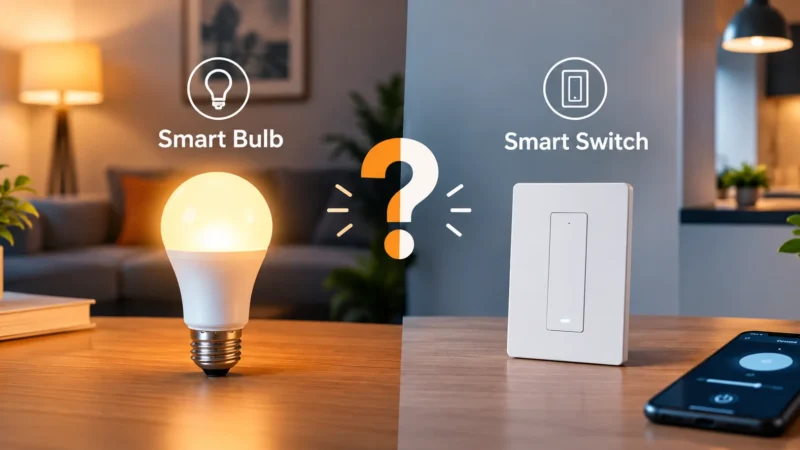
Read Also: Smart Bulb or Smart Switch? The Question Everyone Gets Wrong
Our Verdict
After going through the actual numbers, the answer is not a simple yes or no, it depends on which lights you are talking about.
For rooms you use daily, living rooms, kitchens, bedrooms, main hallways, switching to smart LEDs now makes clear financial sense. The payback period is usually under a year, and you get years of lower bills and useful features after that. This is the low hanging fruit, the switch that is easy to justify.
For lights used only a few hours a week, store rooms, rarely visited spaces, or spare bathrooms, there is no rush. A regular LED bulb, even a non smart one, already gives you most of the energy saving without the extra cost of smart features you will barely use.
If your home has patchy Wi-Fi or you don’t want to deal with apps and hubs at all, that is a completely valid choice too. Smart lighting is a tool, not an obligation. It makes the most sense where it gets used the most.
The honest advice is to start small. Pick the two or three rooms where lights stay on the longest, switch those first, and let the bill itself tell you whether it was worth extending to the rest of the house.
Frequently Asked Questions
Do smart bulbs really save money?
Yes, for lights that are used regularly. A smart LED can use around 80 percent less power than an incandescent bulb for the same brightness, and most bulbs used a few hours a day pay back their extra cost within a year through lower electricity bills.
How long do smart bulbs last?
Most smart LED bulbs are rated for 15,000 to 30,000 hours of use. With normal daily use of 3 to 4 hours, that works out to roughly 15 to 25 years before the bulb needs replacing, compared to about a year for a standard incandescent bulb.
Do I need a hub for smart bulbs?
Not always. Basic Wi-Fi smart bulbs connect directly to your home network and work fine without any extra hardware. A hub is mainly useful if you’re setting up a large number of bulbs, want faster response times, or are using Zigbee based devices alongside other smart home equipment.
Are smart bulbs worth it if I have an unreliable internet connection?
It depends how unreliable. Occasional short drops in Wi-Fi usually just delay app or voice control for a few minutes. But if your connection is frequently down for long stretches, a regular LED bulb might be a more dependable choice for now.
Which rooms should I switch to smart lighting first?
Start with the rooms where lights stay on the longest each day, typically living rooms, kitchens, and main hallways. These see the fastest payback. Rooms used rarely, like store rooms or spare bathrooms, can wait or simply use regular LED bulbs instead.
Still have questions?
Ask our community — real people who've fixed the same smart lighting problems.