
 0
0
 0
0
Street lighting has always been one of the biggest expenses for cities.
Massive electricity bills, inefficient usage, and outdated systems continue to drain municipal budgets.
That’s exactly where AI street lights are changing the game.
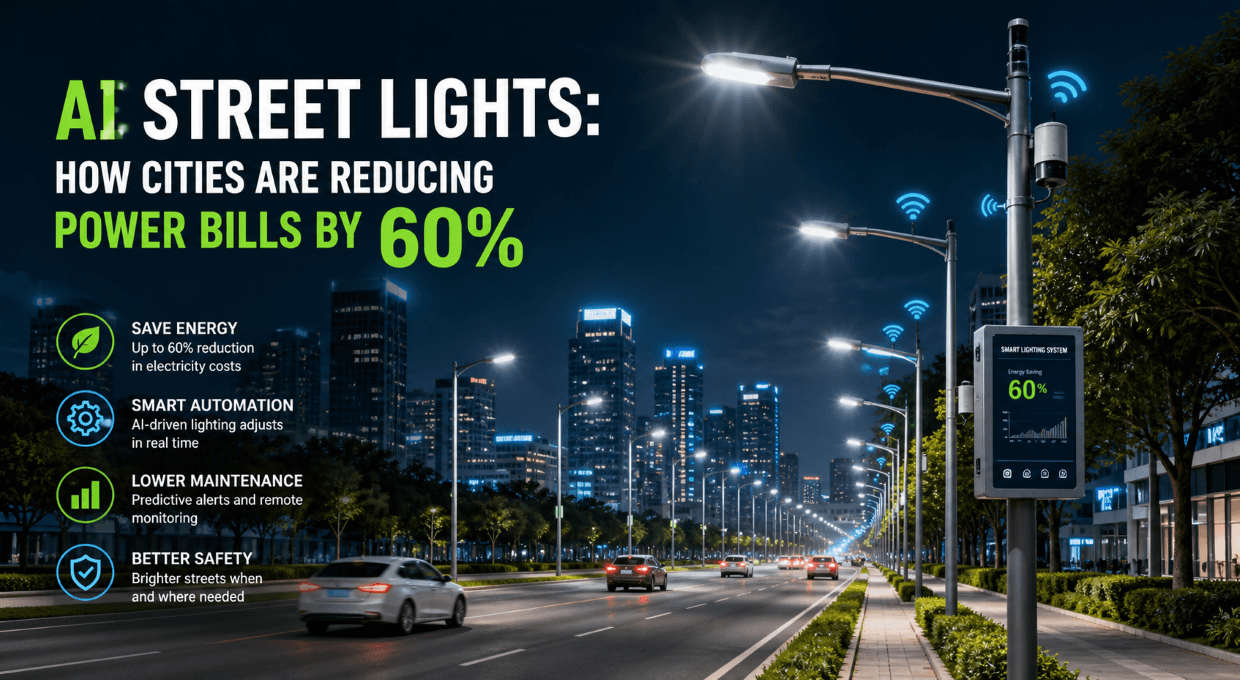
Cities worldwide are now adopting AI street lights to cut energy costs, improve efficiency, and build smarter urban environments. In some cases, power bills have dropped by as much as 60%—a number that was nearly impossible just a decade ago.
If you’re wondering how this works—and whether it’s just hype or real transformation—this guide breaks it down in practical, no-nonsense terms.
What Are AI Street Lights and How Do They Work?
AI street lights are not just LED bulbs.
They are intelligent systems powered by AI, sensors, and IoT connectivity.
Instead of staying ON all night at full brightness, they adjust based on real-world conditions.
Core Technologies Behind AI Street Lights
✔ Motion sensors detect vehicles and pedestrians
✔ Light sensors adjust brightness based on ambient light
✔ AI algorithms predict traffic patterns
✔ IoT connectivity enables remote control and monitoring
✔ Data analytics optimize performance over time
In simple terms:
The system learns when, where, and how much light is needed—and acts accordingly.
How AI Street Lights Reduce Power Bills by 60%
This is where things get interesting.
Cities are not saving money from just one factor—but a combination of smart optimizations.
1. Adaptive Brightness Control
Traditional lights run at 100% all night.
AI street lights:
✔ Dim lights during low traffic hours
✔ Increase brightness only when movement is detected
Result → 30–40% energy savings instantly
2. Smart Scheduling Based on Real Data
Instead of fixed timers, AI uses:
✔ Historical traffic data
✔ Weather patterns
✔ Seasonal daylight changes
This ensures lights operate only when necessary.
3. Predictive Maintenance
Old systems waste energy due to faulty components.
AI systems can:
✔ Detect failures early
✔ Alert maintenance teams automatically
✔ Prevent energy leaks
4. LED + AI Combination
LED lights already reduce energy usage by ~50%.
When combined with AI optimization:
✔ Additional 20–30% savings
5. Centralized Monitoring Systems
City officials can control thousands of lights from one dashboard.
✔ Turn off unused zones
✔ Adjust entire districts in seconds
✔ Monitor real-time consumption
Real-World Impact: Before vs After AI Street Lights
| Factor | Traditional Lighting | AI Street Lights |
|---|---|---|
| Energy Usage | Very High | Reduced by up to 60% |
| Maintenance | Manual & delayed | Predictive & automated |
| Brightness | Fixed | Dynamic |
| Cost Efficiency | Low | High |
| Monitoring | Limited | Real-time dashboard |
Key Benefits of AI Street Lights Beyond Cost Savings
Saving money is just the beginning.
✔ Improved Public Safety
Lights brighten automatically when movement is detected.
This reduces crime and improves visibility.
✔ Reduced Carbon Footprint
Lower electricity usage = fewer emissions.
Cities using smart street lights significantly cut their carbon footprint.
✔ Smart City Integration
AI street lights can integrate with:
✔ Traffic systems
✔ Surveillance cameras
✔ Environmental sensors
They become part of a larger smart city ecosystem.
✔ Longer Equipment Lifespan
Since lights aren’t running at full capacity constantly:
✔ Less wear and tear
✔ Fewer replacements
✔ Lower long-term costs
Challenges Cities Face When Implementing AI Street Lights
This technology isn’t perfect.
Understanding the challenges helps make better decisions.
1. High Initial Investment
Installing AI-powered infrastructure requires:
✔ Sensors
✔ Software platforms
✔ Network connectivity
Upfront cost can be significant.
2. Data Security Concerns
Connected systems are vulnerable to cyber threats.
Cities must invest in secure networks and encryption.
3. Integration with Old Infrastructure
Older cities face compatibility issues.
Retrofitting existing systems can be complex.
Step-by-Step: How Cities Are Transitioning to Smart Street Lights
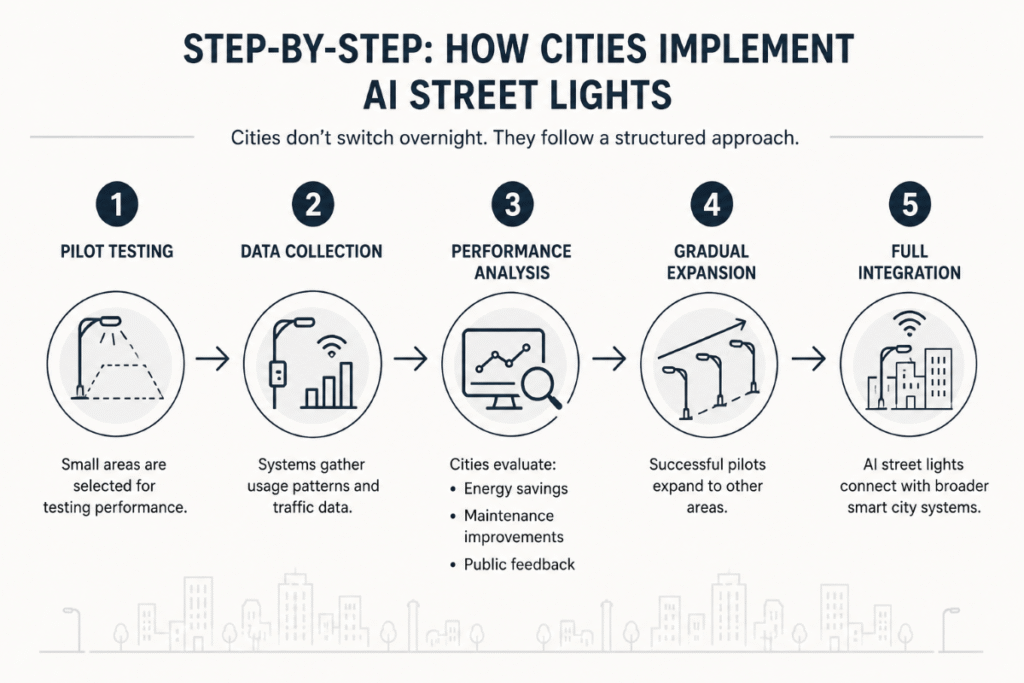
Here’s a simplified roadmap most cities follow:
✅ Phase 1: Audit Existing Infrastructure
✔ Analyze energy usage
✔ Identify inefficiencies
✅ Phase 2: Pilot Program
✔ Test AI-powered street lights in selected zones
✔ Measure performance and savings
✅ Phase 3: Gradual Expansion
✔ Scale to more districts
✔ Optimize based on data
✅ Phase 4: Full Automation
✔ Centralized control
✔ Predictive analytics fully active
Checklist: Is Your City Ready for AI Street Lights?
Use this quick checklist:
> High electricity costs from street lighting
> Existing LED infrastructure (optional but helpful)
> Reliable internet or IoT network
> Budget for smart city upgrades
> Skilled workforce or tech partners
If most boxes are checked → AI-powered street lights are a strong fit
Future of AI Street Lights
The future goes beyond lighting.
AI – street lights are evolving into multi-purpose smart poles.
Soon, they may include:
✔ EV charging stations
✔ 5G connectivity
✔ Air quality monitoring
✔ Smart surveillance systems
Cities won’t just save money—they’ll become intelligent ecosystems.
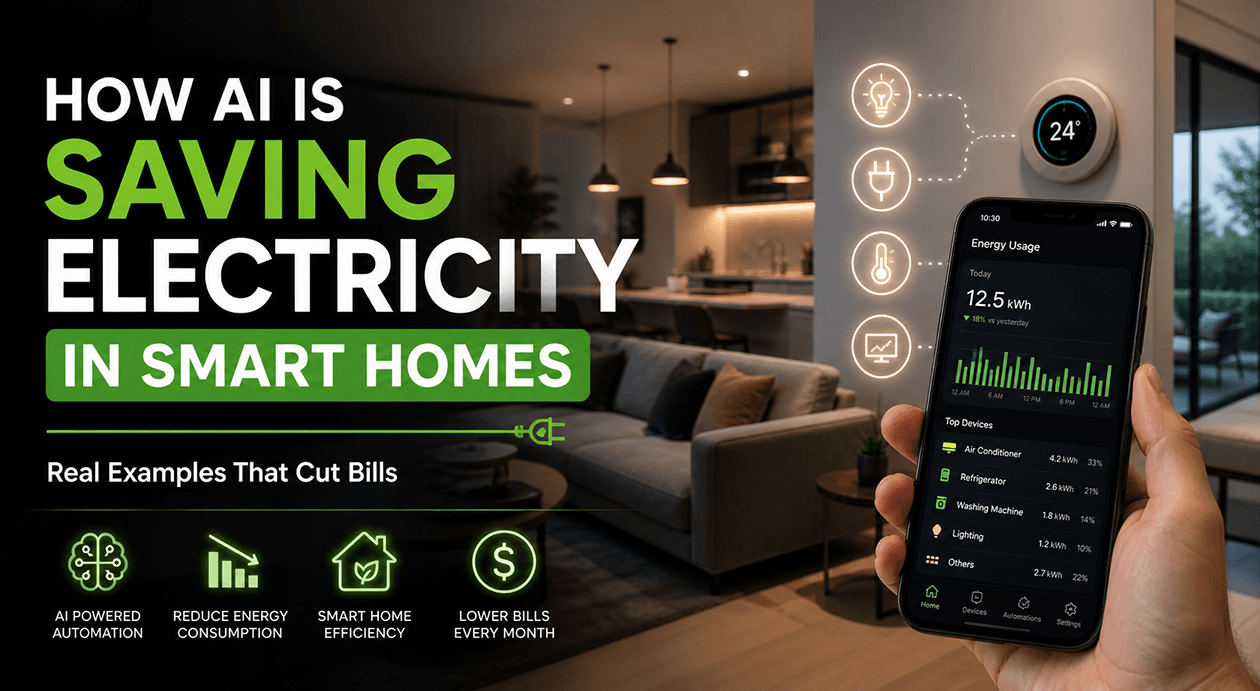
Read Also: How AI Is Saving Electricity in Smart Homes (Real Examples)
FAQ: AI Street Lights
What are AI street lights and how do they work?
AI-powered street lights are smart lighting systems that adjust brightness based on real-time conditions. They use sensors, cameras, and data algorithms to detect movement, traffic flow, and environmental factors.
Instead of staying fully lit all night, these lights dim or brighten automatically. This reduces unnecessary energy usage while maintaining visibility and safety.
How much energy can AI street lights actually save?
Most cities report 40% to 60% energy savings after switching to AI-powered street lights.
Savings depend on factors like:
• Traffic density
• Installation area
• Existing infrastructure
• Lighting schedules
Areas with low nighttime activity see the highest reductions.
Are AI-powered street lights expensive to install?
Initial costs are higher than traditional lighting. However, the long-term savings usually outweigh the investment.
Cities recover costs through:
• Lower electricity bills
• Reduced maintenance expenses
• Government sustainability incentives
Many municipalities break even within 3–5 years.
Do AI-powered street lights improve public safety?
Yes, significantly.
AI-powered street lights respond instantly to movement. When pedestrians or vehicles appear, brightness increases in that area.
This leads to:
• Better visibility
• Reduced crime risks
• Safer roads and walkways
Static lighting cannot provide this level of responsiveness.
What technologies are used in AI street lighting systems?
These kind of street light rely on a combination of technologies:
• Motion and infrared sensors
• IoT (Internet of Things) connectivity
• Machine learning algorithms
• Cloud-based control systems
These technologies work together to create an adaptive lighting network.
Can AI-powered street lights work in all weather conditions?
Yes. Most systems are designed to handle:
• Rain
• Fog
• Dust
• Extreme temperatures
Some advanced setups even adjust brightness based on weather conditions to improve visibility.
How do smart street lights reduce maintenance costs?
Traditional street lights require manual inspections.
AI systems detect faults automatically and send alerts when issues occur.
This enables:
• Faster repairs
• Fewer maintenance trips
• Lower labor costs
Predictive maintenance prevents major failures before they happen.
Are there privacy concerns with AI-powered street lights?
Some systems use cameras or advanced sensors, which raises valid concerns.
Cities address this by:
• Limiting data collection
• Using anonymized data
• Following strict privacy regulations
Not all AI-powered street lights use cameras—many rely only on motion sensors.
What is the lifespan of AI street lighting systems?
Most smart street lights use LED technology, which lasts longer than traditional bulbs.
Average lifespan:
• LED lights: 10–20 years
• Smart components: 5–10 years (with updates)
Proper maintenance extends system life significantly.
Read Also: How to Set Up Voice-Controlled LED Strip Lights with Alexa or Google Assistant
Which cities are already using AI street lights?
Many global cities have adopted AI street lighting, including:
• Barcelona
• Los Angeles
• Singapore
• Copenhagen
These cities report major reductions in energy consumption and improved urban efficiency.
Can AI street lights integrate with smart city systems?
Yes. This is one of their biggest advantages. AI-powered street lights can connect with:
• Traffic management systems
• Surveillance networks
• Emergency response systems
• Environmental monitoring tools
They often act as a backbone for broader smart city infrastructure.
Are AI street light environmentally friendly?
Absolutely. They reduce:
• Electricity consumption
• Carbon emissions
• Light pollution (through adaptive dimming)
Cities use them to meet sustainability goals and climate targets.
Do AI street light work in rural areas?
Yes, and they can be even more effective there.
Rural areas often have low traffic at night, making adaptive lighting highly efficient. Lights stay dim most of the time and activate only when needed.
What challenges should cities expect before adoption?
Common challenges include:
• High upfront investment
• Infrastructure upgrades
• Technical integration
• Public awareness and acceptance
Careful planning and pilot testing help overcome these issues.
Are AI street lights the future of urban infrastructure?
Yes. Cities are moving toward data-driven systems, and lighting plays a major role.
AI street light are not just about illumination—they support:
• Energy optimization
• Urban safety
• Smart city ecosystems
Adoption will continue to grow rapidly.
Final Thoughts
AI street lights are not just a trend—they’re a practical solution to a long-standing urban problem.
With up to 60% reduction in power bills, improved safety, and smarter infrastructure, the shift is inevitable.
The real question is no longer “Should cities adopt AI street lights?”
It’s “How fast can they implement them?”