
 0
0
 0
0
You walk into your room after a long day, and the lights are already soft and calming…
In the morning, they slowly brighten on their own, helping you wake up without that harsh, sudden glare.
It almost feels like your room understands what you need.
The interesting part? This isn’t some far-off idea anymore.
It’s already happening with AI smart lighting, and more people are starting to use it in their homes.
But how does it actually work behind the scenes?
And more importantly — can it really help you sleep better and feel more relaxed?
Let’s break it down in a simple way. 👇
What Is AI Smart Lighting?
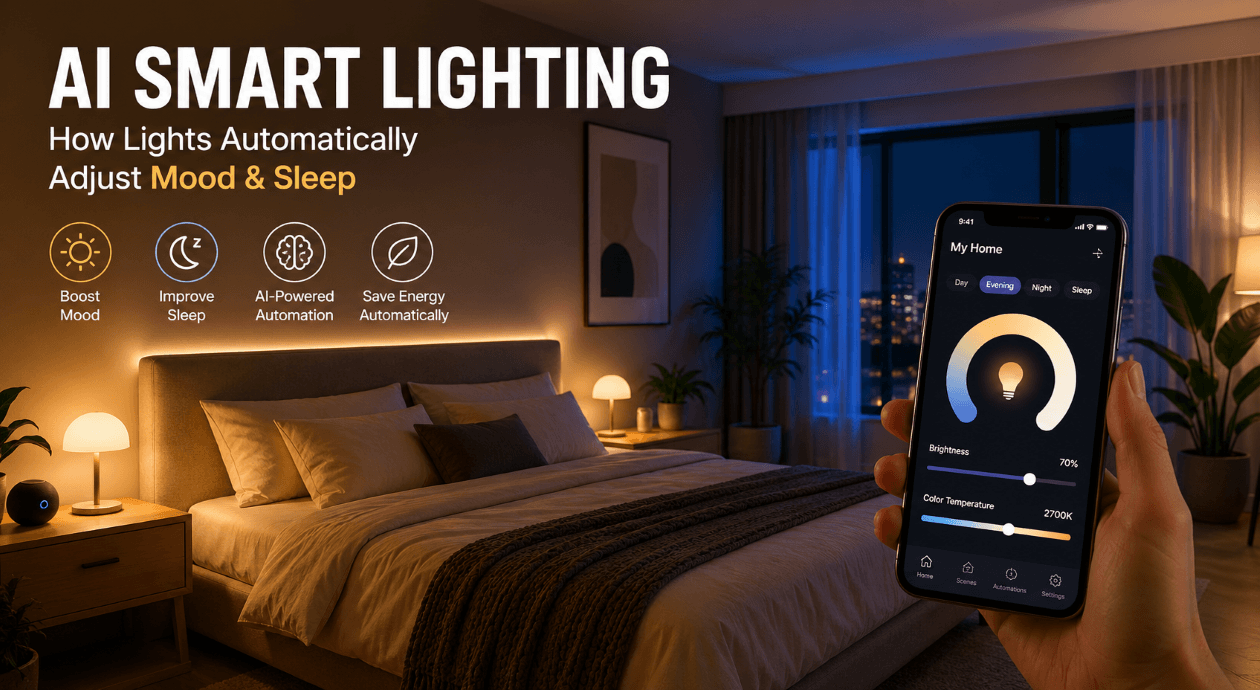
AI smart lighting uses artificial intelligence + sensors + automation to adjust lighting conditions in real-time.
Instead of manual control, your lights:
- Learn your daily habits
- Adjust brightness automatically
- Change color temperature based on time
- Sync with your sleep cycle
👉 In simple terms:
Your lights think for you.
Read Also: How the Colorful Atmosphere Moon Light Clock Works: Read Before Buy
How AI Lighting Affects Mood & Sleep
Your body runs on something called the circadian rhythm—your internal clock.
Light directly controls it.
🌅 Morning Light = Energy
Bright, cool light signals your brain to:
- Wake up
- Boost focus
- Increase alertness
🌇 Evening Light = Relaxation
Warm, dim lighting tells your brain:
- Slow down
- Produce melatonin
- Prepare for sleep
👉 Traditional lighting ignores this.
👉 AI lighting optimizes it automatically.
How AI Smart Lighting Works
AI lighting systems rely on a combination of technologies:
1. Sensors
- Motion sensors detect presence
- Ambient sensors measure natural light
2. Machine Learning
- Learns your schedule (wake time, sleep time)
- Predicts when you need specific lighting
3. Automation Rules
- Lights dim at night
- Brighten in the morning
- Adjust when you enter/leave rooms
Types of Smart Lighting Adjustments
1. Circadian Lighting
Lights mimic natural daylight patterns.
- Cool white in the morning
- Neutral mid-day
- Warm tones at night
2. Mood-Based Lighting
AI adjusts lighting based on activity:
- Working → Bright white
- Relaxing → Soft warm
- Watching movies → Dim ambient
3. Sleep Optimization Mode
- Gradual dimming before bedtime
- Eliminates blue light
- Simulates sunset
4. Wake-Up Simulation
Instead of alarms:
- Lights slowly brighten
- Mimics sunrise
- Helps you wake naturally
Read Also: How does a motion activated light work? Want to Know Smart Lighting Secrets!
Benefits of AI Smart Lighting
✅ Better Sleep Quality
- Supports natural melatonin production
- Reduces late-night alertness
✅ Improved Mood
- Balanced lighting reduces stress
- Helps combat seasonal depression
✅ Higher Productivity
- Bright, cool light improves focus
- Reduces fatigue during work
✅ Energy Efficiency
- Lights turn off automatically
- Adjust brightness to save power
Traditional Lighting vs AI Smart Lighting
| Feature | Traditional Lighting | AI Smart Lighting |
|---|---|---|
| Control | Manual | Automatic |
| Energy Efficiency | Low | High |
| Mood Adjustment | None | Dynamic |
| Sleep Support | Poor | Optimized |
| Personalization | None | Fully adaptive |
Key Features to Look For (2026)
If you’re planning to upgrade, look for:
- Adaptive brightness control
- Color temperature tuning (2700K–6500K)
- Voice & app control
- Sleep/wake automation modes
- Integration with smart home systems
How to Set Up AI Lighting in Your Home
You don’t need a futuristic house to get started.
Step-by-step:
- Replace bulbs with smart bulbs
- Install a smart lighting app
- Enable automation settings
- Set schedules (morning/evening)
- Let AI learn your habits
👉 Start with your bedroom first—you’ll notice the biggest impact there.
Pro Tips for Maximum Results
- Keep lights cool (5000K+) in the morning
- Switch to warm (2700K) after sunset
- Avoid bright light 1 hour before bed
- Use motion-based lighting for nighttime movement
AI Smart Lighting Setup Checklist
- Install smart bulbs in key rooms
- Enable circadian lighting mode
- Set bedtime dimming schedule
- Activate sunrise wake feature
- Sync lighting with daily routine
❌ Common Mistakes to Avoid
- Using bright white light at night
- Ignoring automation features
- Setting static schedules (AI works best when adaptive)
- Over-lighting rooms unnecessarily
Future of AI Lighting (2026 & Beyond)
AI lighting is evolving fast.
Soon, systems will:
- Detect your emotions via voice or movement
- Sync with wearables and health data
- Adjust lighting based on stress levels
- Integrate with AR/VR environments
👉 Lighting will become a health tool—not just a utility.
FAQ:
What is AI smart lighting?
AI smart lighting is a system that automatically adjusts brightness and color temperature based on your daily routine, time of day, and environment. It helps improve sleep, mood, and energy levels by aligning lighting with your body’s natural circadian rhythm.
Does smart lighting improve sleep?
Yes, smart lighting can improve sleep by reducing blue light exposure at night and using warm, dim lighting. This helps your body produce melatonin naturally, making it easier to fall asleep and stay asleep.
What light color is best for sleep?
Warm light (yellow or orange tones) is best for sleep. It reduces eye strain and supports melatonin production, unlike cool white or blue light, which can keep your brain alert.
Is AI lighting better than normal smart lights?
AI lighting is better because it adapts to your habits automatically. Unlike regular smart lights that follow fixed schedules, AI lighting learns your routine and adjusts in real time for better comfort and efficiency.
Final Thoughts
Most people spend thousands on mattresses, supplements, and routines……but ignore the one thing they interact with every day:
light.
AI smart lighting is one of the simplest upgrades with the biggest impact on your mood, energy, and sleep.
Once you experience it,
going back to regular lighting feels… wrong.