
 0
0
 0
0
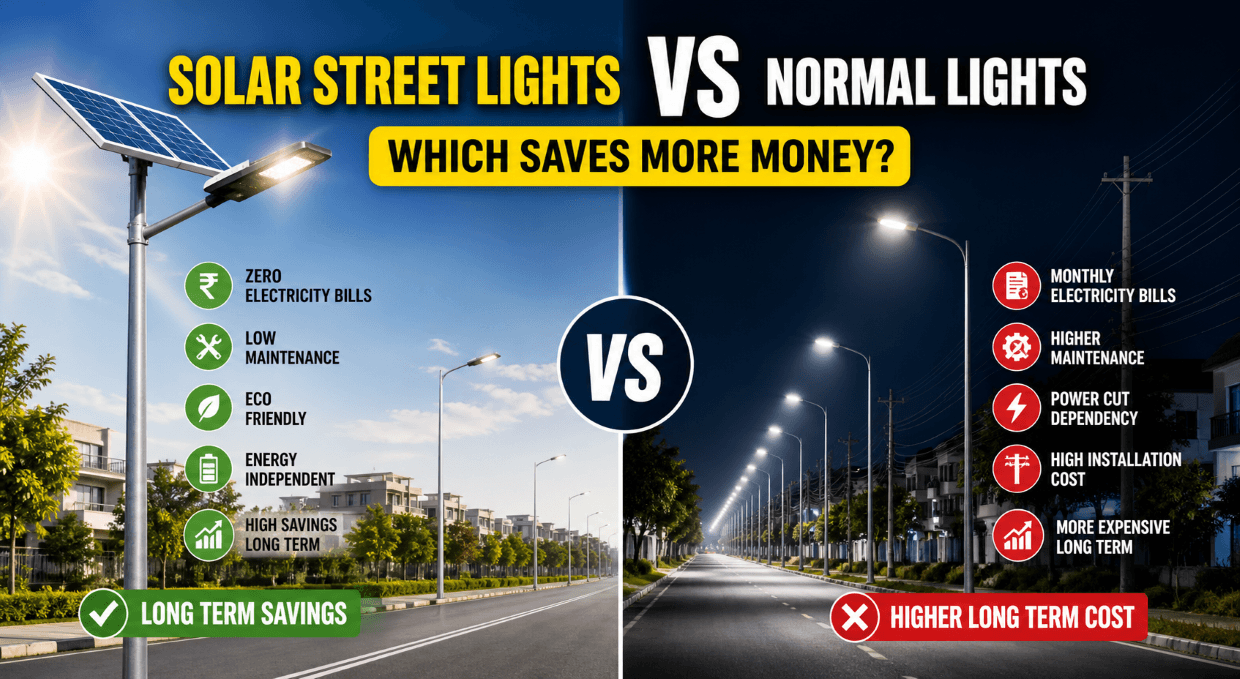
You’re probably comparing solar street lights vs normal lights. It’s because the cost of electricity keeps going up and up, and maintenance bills never seem to stop coming in. The real question isn’t just upfront cost—it’s long-term savings, reliability, and return on investment.
This guide breaks it down clearly so you can decide what actually saves money over time.
Solar street lights are more cost-effective in the long run because they eliminate electricity costs and reduce maintenance expenses, making them cheaper over time despite higher upfront costs.
What Are Solar Street Lights?
Solar street lights generate electricity from sunlight using photovoltaic panels. They store energy in batteries and power LED lights at night.
Key components:
• Solar panel
• Battery system
• LED fixture
• Controller (automatic ON/OFF)
They run independently—no connection to the power grid.
What Are Normal Street Lights?
Normal street lights rely on grid electricity. These include sodium vapor lamps, CFLs, or LED street lights connected to utility power.
Common types:
• High-pressure sodium lights
• Metal halide lamps
• Grid-powered LED lights
They depend on continuous electricity supply and wiring infrastructure.
Cost Comparison: Solar Street Lights vs Normal Lights
This is where things get interesting. Solar street lights may cost more initially, but they save significantly over time compared to traditional lighting.
| Factor | Solar Street Lights ✔ | Normal Lights ✖ |
|---|---|---|
| Initial Cost | Higher upfront | Lower upfront |
| Electricity Cost | Zero Cost | Ongoing Monthly Bills |
| Installation | No wiring needed | Requires wiring & trenching |
| Maintenance | Minimal | Regular maintenance needed |
| Lifespan | Long-lasting (10–25 yrs) | Shorter (5–10 yrs) |
Where Solar Street Lights Save More Money
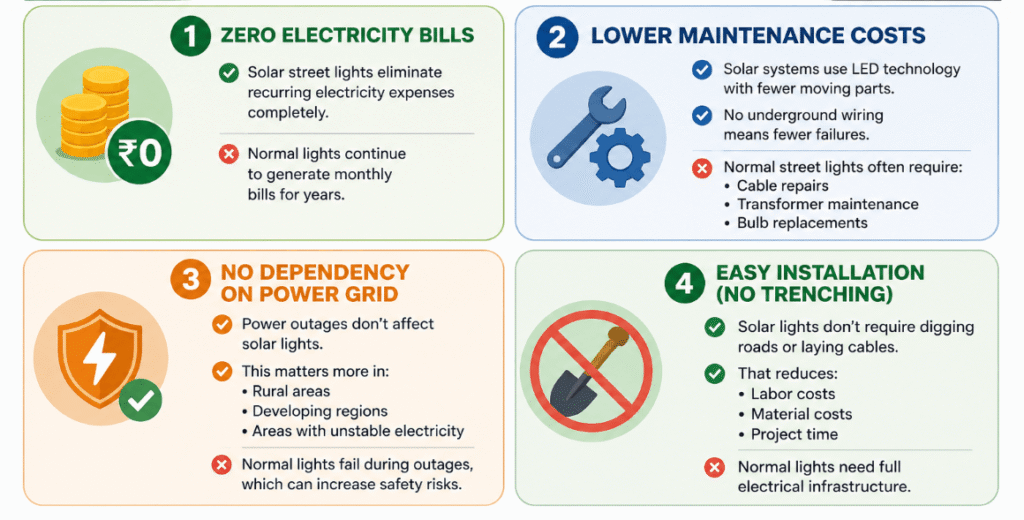
1. Zero Electricity Bills
Solar street lights eliminate recurring electricity expenses completely.
That alone changes the math.
Normal lights continue to generate monthly bills for years.
2. Lower Maintenance Costs
Solar systems use LED technology with fewer moving parts.
No underground wiring means fewer failures.
Normal street lights often require:
• Cable repairs
• Transformer maintenance
• Bulb replacements
3. No Dependency on Power Grid
Power outages don’t affect solar lights.
This matters more in:
• Rural areas
• Developing regions
• Areas with unstable electricity
Normal lights fail during outages, which can increase safety risks.
4. Easy Installation (No Trenching)
Solar lights don’t require digging roads or laying cables.
That reduces:
• Labor costs
• Material costs
• Project time
Normal lights need full electrical infrastructure.
Where Normal Lights May Still Be Cheaper
Let’s be realistic—solar isn’t always the winner.
1. Lower Initial Investment
Normal lights cost significantly less upfront.
This matters if:
• Budget is tight
• Short-term projects are planned
2. High Power Requirements
Solar lights may struggle in areas needing:
• Extremely high brightness
• Continuous heavy-duty lighting
Grid-powered lights can handle higher loads more consistently.
Real Cost Breakdown Over 5 Years
Over just 5 years, solar street lights can save you more than ₹80,000 compared to traditional lighting.
| Cost Breakdown (5 Years) | Solar Street Light ✔ | Normal Street Light ✖ |
|---|---|---|
| Initial Cost | ₹25,000 | ₹10,000 |
| Electricity Cost (5 Years) | ₹0 | ₹90,000 |
| Maintenance | ₹2,000 | ₹10,000 |
| Total Cost (5 Years) | ~₹27,000 | ~₹1,10,000 |
Conclusion from numbers:
Solar lights cost more upfront—but save 3–4x more money over time.
When Should You Choose Solar Street Lights?
✓ You want long-term savings
✓ Electricity costs are high
✓ Area faces frequent power cuts
✓ You want eco-friendly infrastructure
✓ Installation area is remote
When Should You Choose Normal Lights?
✓ You need low upfront cost
✓ Project duration is short-term
✓ Area already has strong grid infrastructure
✓ High brightness is critical
Key Differences at a Glance: Solar Street Lights vs Normal Lights
Solar Street Lights ✔
- High initial cost
- Zero electricity bills
- Low maintenance
- Independent system
- Long-term savings
Normal Street Lights ✖
- Low initial cost
- Continuous electricity expenses
- Higher maintenance
- Grid dependent
- Expensive long-term
Read Also: Solar-Powered Kiosks: How Solar Kiosks are Changing Street Commerce
Hidden Factors Most People Ignore: Solar Street Lights vs Normal Lights
🔋 Battery Replacement Cost
Solar systems require battery replacement after 5–7 years. This adds to the overall cost, but it is still significantly cheaper than paying continuous electricity bills every month.
🌦️ Weather Dependency
Performance may slightly drop during cloudy days. However, modern solar systems use efficient battery storage to ensure consistent lighting, though performance can vary by location.
🏛️ Government Subsidies
Many regions offer subsidies and incentives for solar installations. This can reduce the initial investment significantly and improve overall return on investment.
Final Verdict: Which Saves More Money?
Solar street lights clearly win when you look beyond the initial cost. They cut electricity bills, reduce maintenance, and provide reliable lighting without grid dependency.
Normal lights only seem cheaper at the beginning—but become expensive over time.
⚡ Quick Decision Guide
Pick what matters most to you:
👉 Go for Solar Street Lights if you want:
- 💰 Strong long-term return on investment
- 🔋 Freedom from electricity dependency
- 📉 Lower overall cost over time
👉 Choose Normal Street Lights if you need:
- 💸 Lower upfront investment
- ⚡ Quick installation with minimal planning
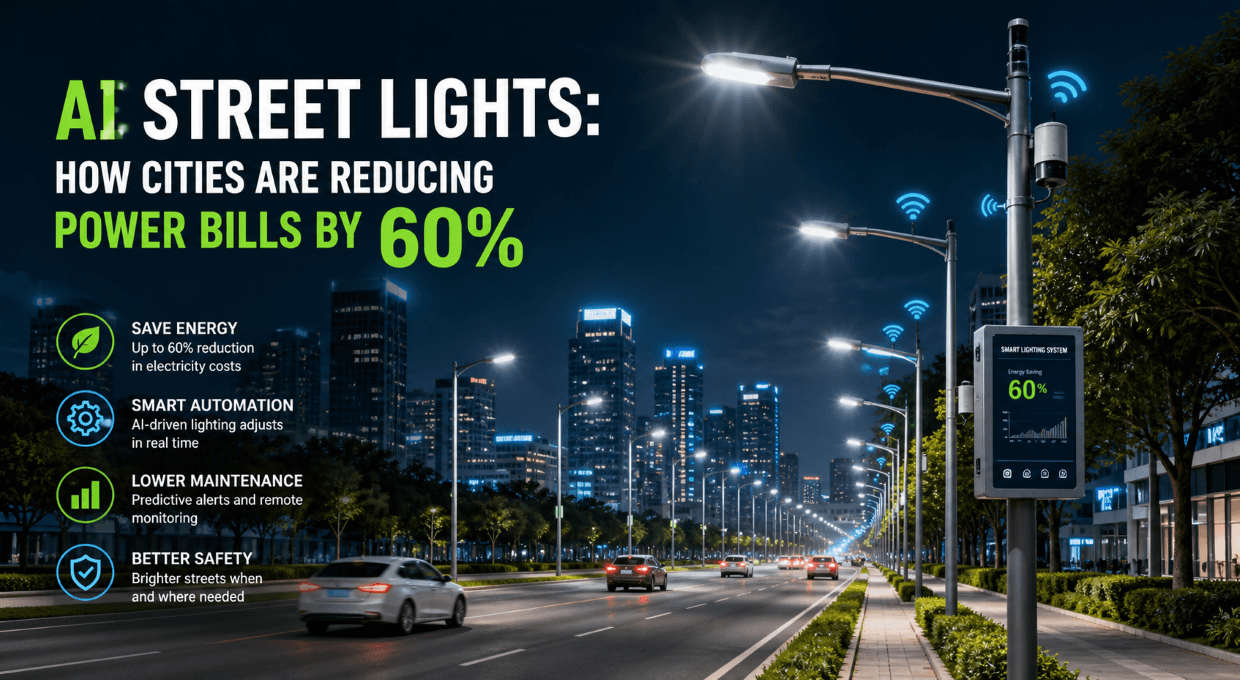
Read Also: AI Street Lights: How Cities Are Cutting Power Bills by 60%
FAQ: Solar Street Lights vs Normal Lights
What is the main difference between solar street lights and normal lights?
The core difference lies in the power source. Solar street lights use sunlight to generate electricity, while normal lights depend on grid power.
Solar lights operate independently and eliminate electricity bills. Normal lights require continuous power supply and monthly payments.
Do solar street lights really save more money?
Yes, solar street lights save significantly more money over time.
The upfront cost is higher, but there are no electricity bills and minimal maintenance expenses. Over 5–10 years, total savings can be 3–5 times higher compared to normal lights.
How long do solar street lights last?
Most solar street lights last between 10 to 25 years.
• LED lights: 10–15 years
• Solar panels: 20–25 years
• Batteries: 5–7 years (replacement needed)
Proper maintenance increases lifespan and efficiency.
Are solar street lights reliable during cloudy or rainy days?
Modern solar street lights store extra energy in batteries, allowing them to work for 2–3 days without sunlight.
However, performance may slightly reduce during long periods of low sunlight.
Why are solar street lights expensive initially?
Solar street lights include advanced components:
• Solar panels
• Lithium batteries
• Smart controllers
• High-efficiency LEDs
These increase upfront cost, but eliminate long-term expenses.
Which is better for rural areas: solar or normal street lights?
Solar street lights are better for rural and remote areas.
They don’t require grid connectivity, reduce infrastructure costs, and provide consistent lighting even during power cuts.
Do solar street lights require maintenance?
Yes, but very minimal.
Basic maintenance includes:
• Cleaning solar panels
• Checking battery health
• Inspecting wiring occasionally
Compared to normal lights, maintenance costs are much lower.
Can solar street lights replace traditional street lights completely?
In most cases, yes.
Solar street lights can replace traditional lighting in:
• Streets
• Highways
• Parks
• Residential areas
However, high-power industrial or stadium lighting may still require grid-based systems.
What are the disadvantages of solar street lights?
Some limitations include:
• Higher initial investment
• Battery replacement cost
• Slight performance drop in low sunlight
• Limited brightness for high-load applications
Still, long-term benefits usually outweigh these drawbacks.
Are there government subsidies for solar street lights in India?
Yes, various government programs support solar lighting projects.
Subsidies and incentives can reduce installation costs, especially for:
• Rural electrification
• Smart city projects
• Public infrastructure
Check state-wise schemes for exact benefits.
Which option is better for long-term investment?
Solar street lights are the better long-term investment.
They provide:
• Zero electricity cost
• Lower maintenance
• Higher ROI over time
Normal lights may seem cheaper initially but cost more in the long run.