
 0
0
 0
0
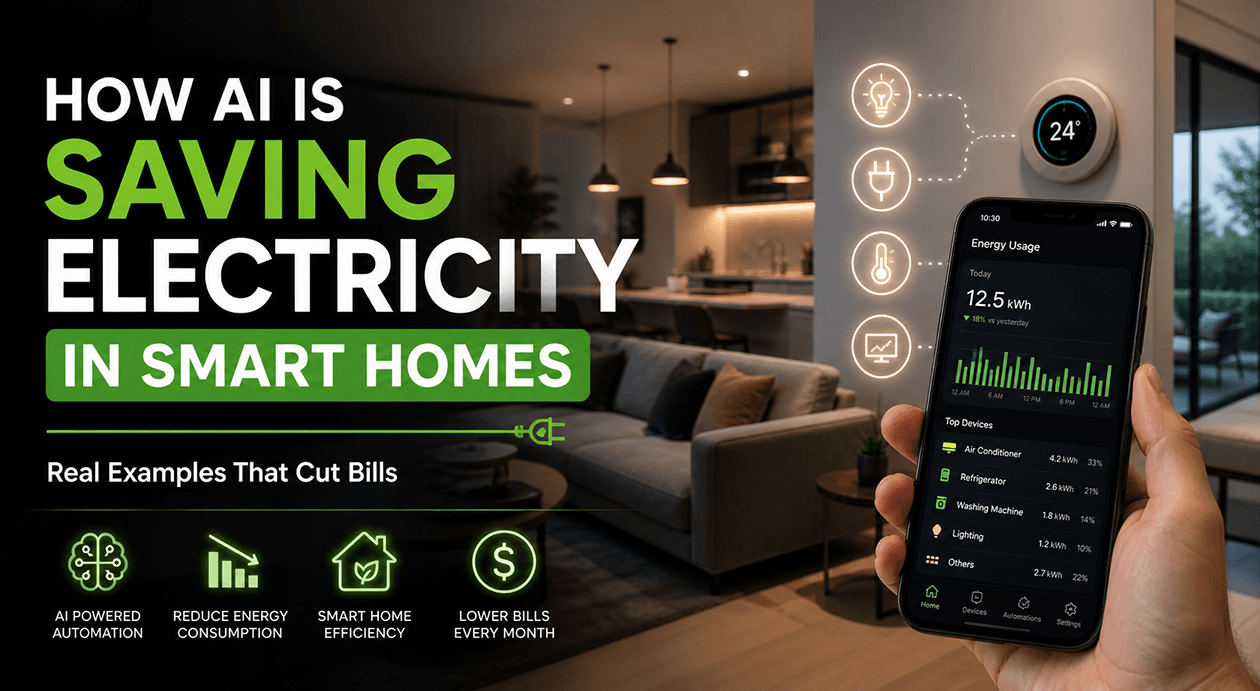
Electricity bills keep going up. You switch off lights, unplug devices, and still see high costs. Frustrating, right? Here’s the shift: how AI Is saving electricity in smart homes in ways most people don’t even realize.
From learning your habits to optimizing energy use automatically, AI is quietly cutting down waste—and your bills.
Let’s break down exactly how AI is saving electricity, with real examples you can actually use.
What Does “AI in Smart Homes” Really Mean?
AI in smart homes isn’t just voice assistants.
It’s about systems that:
✔ Learn your behavior
✔ Predict energy usage
✔ Automate decisions to reduce waste
Think of it as a brain behind your home’s electricity system.
Real Ways How AI Is Saving Electricity in Smart Homes
1. Smart Thermostats That Learn Your Routine
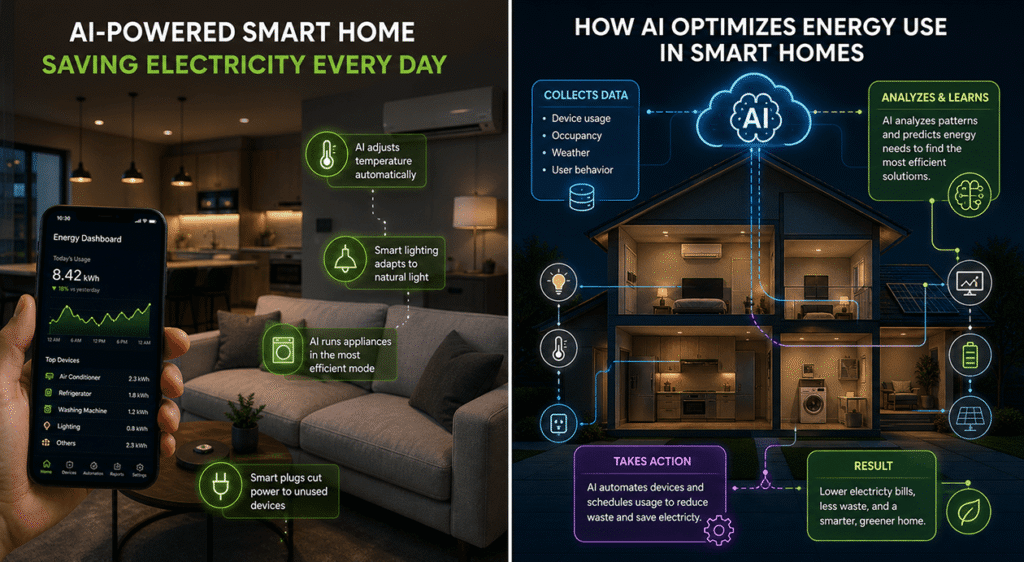
Devices like AI-powered thermostats don’t just follow schedules.
They learn when you’re home, sleeping, or away.
Real Example:
- Adjusts cooling when you leave home
- Pre-cools rooms before you return
- Avoids unnecessary usage
💡 Result: Up to 20–30% savings on cooling costs.
2. AI-Powered Lighting Systems
Lights left on in empty rooms? AI fixes that instantly.
How it works:
- Motion detection + AI behavior tracking
- Adjusts brightness based on natural light
- Turns off unused lights automatically
Real Example:
Offices and homes using AI lighting report:
✔ Reduced unnecessary lighting time
✔ Lower electricity bills
3. AI Energy Monitoring Systems
These systems track your usage in real time.
But here’s the difference:
They don’t just show data—they act on it.
What they do:
- Identify energy-hungry appliances
- Suggest optimized usage times
- Automatically reduce peak consumption
4. Smart Appliances That Optimize Themselves
Modern appliances now come with built-in AI.
Examples include:
- Washing machines adjusting water + power
- Refrigerators optimizing cooling cycles
- AC units adapting to room occupancy
Real Impact:
Less wasted electricity without manual control.
5. AI + Solar Energy Optimization
Homes with solar panels benefit even more.
AI helps:
✔ Store energy efficiently
✔ Decide when to use solar vs grid
✔ Reduce dependency on expensive electricity
6. Voice Assistants with Energy Intelligence
Devices like smart assistants now help reduce usage.
You can:
- Turn off devices remotely
- Set energy-saving routines
- Monitor usage through voice commands
Read Also: AI Smart Lighting: How Lights Automatically Adjust Mood & Sleep (2026 Guide)
Comparison: Traditional vs AI Smart Energy Use
| Feature | Traditional Homes | AI Smart Homes |
|---|---|---|
| Energy Control | Manual | Automated |
| Waste Reduction | Low | High |
| Bill Optimization | Limited | Advanced |
| Real-Time Decisions | ❌ | ✅ |
| Learning Capability | ❌ | ✅ |
✅ Checklist: How to Start Saving Electricity with AI
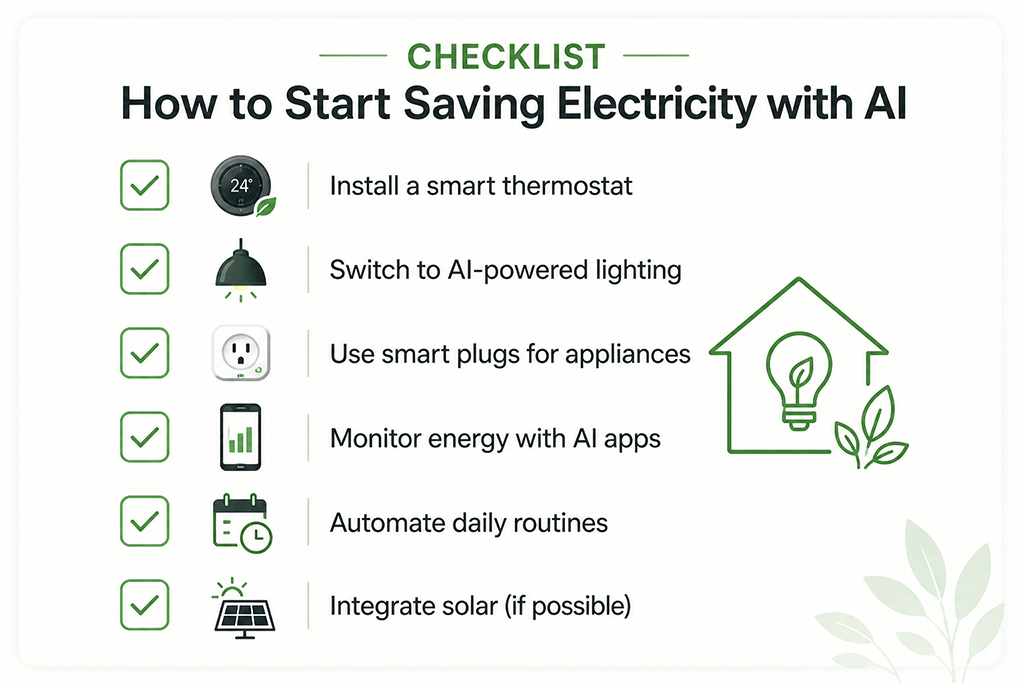
Use this simple checklist:
> Install a smart thermostat
> Switch to AI-powered lighting
> Use smart plugs for appliances
> Monitor energy with AI apps
> Automate daily routines
> Integrate solar (if possible)
Why AI Is a Game-Changer for Energy Saving?
AI doesn’t rely on your memory.
It works 24/7 to:
✔ Eliminate waste
✔ Optimize usage
✔ Reduce human error
That’s why it’s more effective than manual habits.
⚠️ Common Mistakes to Avoid
- Buying smart devices without automation setup
- Ignoring energy reports
- Not connecting devices into one system
- Overusing manual overrides
AI works best when fully integrated.
FAQs: How AI Is Saving Electricity in Smart Homes
1. How does AI help save electricity in smart homes?
AI helps save electricity in smart homes by analyzing user behavior, automating devices, and optimizing energy usage in real time. It learns your daily routines and adjusts appliances like lighting, air conditioning, and heating to reduce unnecessary power consumption.
This leads to lower electricity bills and improved energy efficiency without manual effort.
2. What are the best AI devices for reducing electricity consumption at home?
The most effective AI devices for saving electricity include:
✔ Smart thermostats (optimize cooling and heating)
✔ AI-powered lighting systems (auto-adjust brightness and usage)
✔ Smart plugs (control standby power consumption)
✔ Energy monitoring systems (track and reduce waste)
These devices work together to create a fully automated energy-saving smart home system.
3. Can AI significantly lower electricity bills in smart homes?
Yes, AI can significantly reduce electricity bills, often by 20% to 30% or more, depending on usage and device integration. AI minimizes energy waste by turning off unused devices, optimizing appliance performance, and shifting energy usage to more efficient times.
4. Is AI-based energy saving suitable for small homes or apartments?
AI energy-saving solutions are perfect for small homes and apartments. Even simple setups like smart lights, plugs, or a thermostat can make a noticeable difference. You don’t need a fully automated house to benefit from AI-powered electricity savings.
5. How can beginners start using AI to reduce electricity consumption?
Getting started with AI in smart homes is simple:
✅ Install a smart thermostat or smart lights
✅ Use smart plugs for high-energy appliances
✅ Connect devices through a home automation app
✅ Set automation routines (like turning off devices at night)
Starting small and scaling gradually is the best way to build an energy-efficient AI-powered home.
6. Does AI work with solar panels to save more electricity?
Yes, AI works extremely well with solar systems. It can optimize when to use solar energy vs grid electricity, store excess energy efficiently, and reduce dependency on expensive power sources. This combination creates a highly efficient and sustainable smart home energy system.
Final Thought
AI is no longer futuristic—it’s practical. And when it comes to electricity, it’s one of the smartest ways to save money without changing your lifestyle.