
 0
0
 0
0
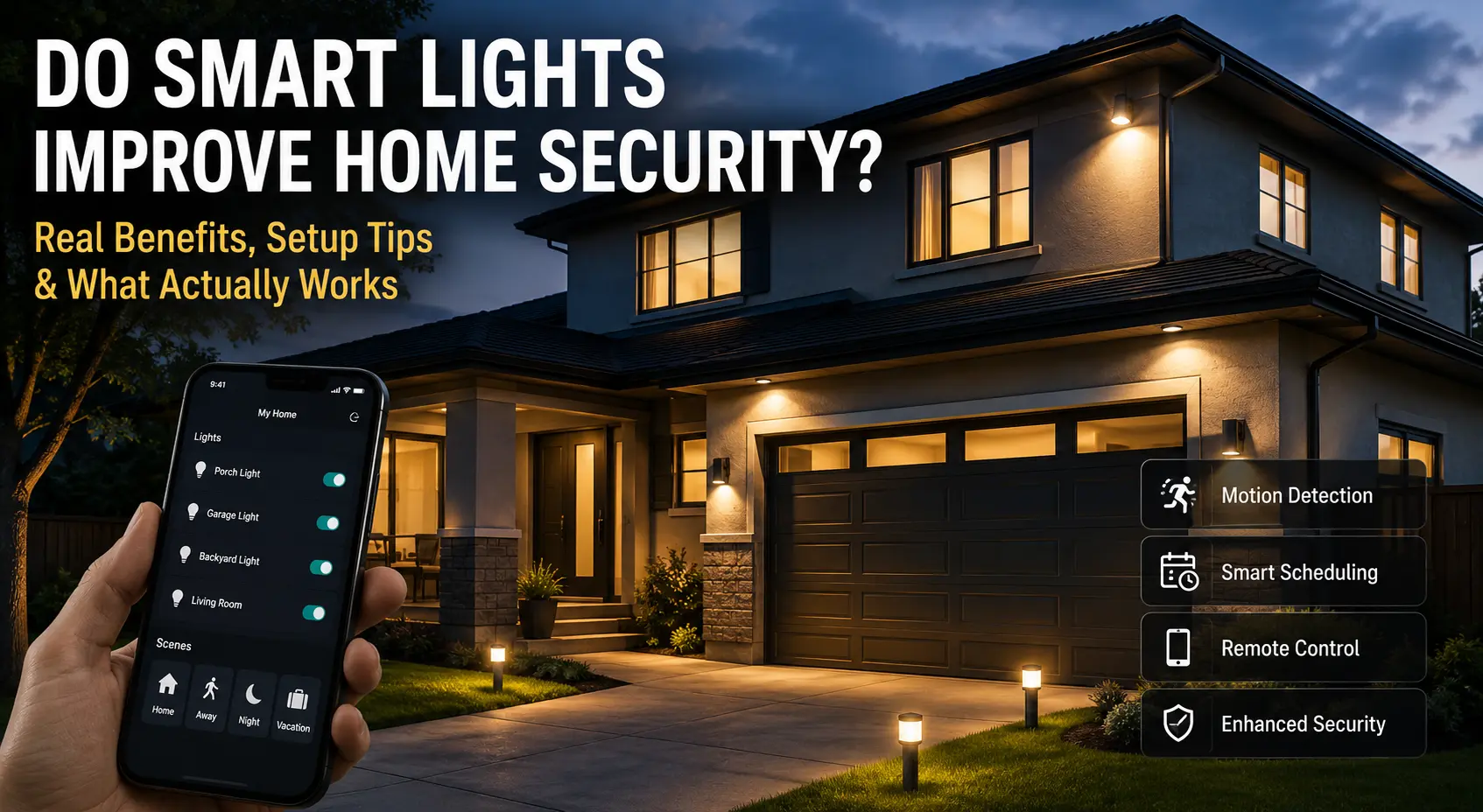
I used to think smart lights were mostly about convenience. I wanted easier control over my living room lights and maybe lower electricity bills. A few months later, I realized smart lighting quietly changed how secure my home felt at night.
That question — do smart lights improve home security — became a lot more practical after I started using motion-triggered routines, vacation schedules, and remote control features during late nights and short trips.
Why Smart Lights Changed the Way I Think About Home Security
I noticed something interesting after installing smart bulbs near my entrance and balcony. My home stopped looking “predictable.” Traditional lights usually follow a fixed pattern. Smart lights break that routine.
You can control them remotely, automate schedules, and react instantly to movement. That unpredictability matters more than most people realize.
A dark house every evening sends signals. Consistent lighting patterns send signals too. Smart lights create the impression that someone is actively inside the home even when nobody is there.
I tested this during a weekend trip. I scheduled lights to turn on in different rooms at varying times. My neighbor later mentioned they assumed I was home the entire weekend.
That alone changed my opinion about whether smart lights improve home security.
How Smart Lights Improve Home Security in Real Situations
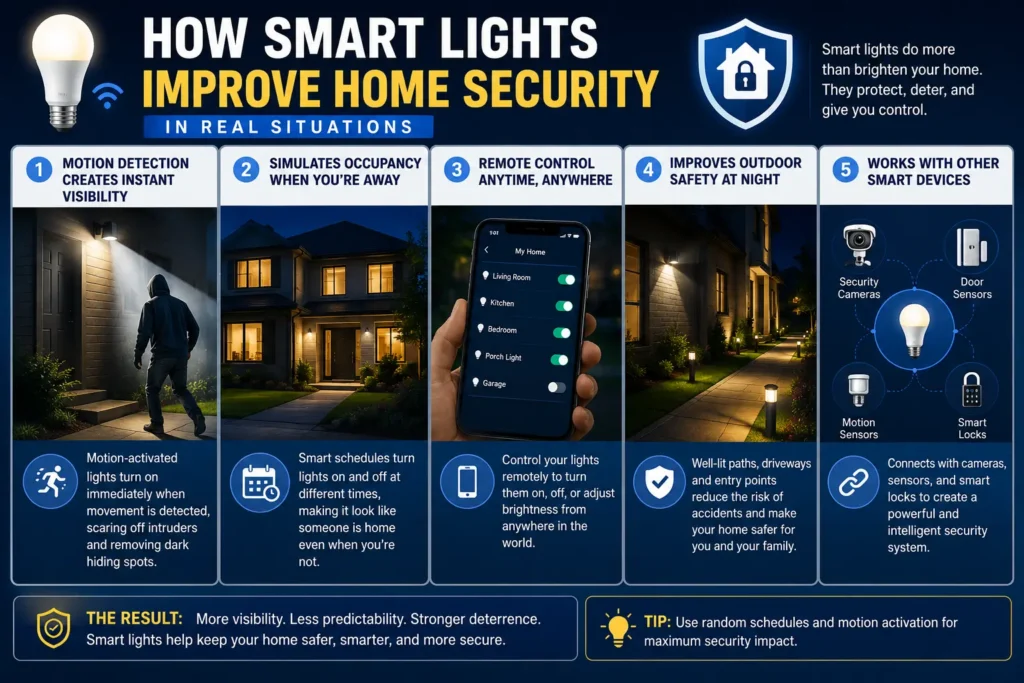
Motion Detection Creates Immediate Visibility
I connected motion sensors to my outdoor smart lights near the gate area. The effect felt instant. Sudden light exposure removes hiding spots around entry points. Most people trying to avoid attention hate visibility.
I also noticed delivery drivers and visitors behaved differently once motion lighting activated automatically.
Where Smart Lighting Helps Most
Front Doors
Automatically light up entry areas when someone approaches your home.
Garage Entrances
Improve visibility and security during late-night parking or movement.
Backyard Pathways
Guide movement safely through outdoor walkways and garden paths.
Staircases
Reduce accident risks with instant illumination on dark stair areas.
Balcony Access Points
Make balconies safer and more convenient during nighttime access.
Remote Control Helps During Unexpected Situations
One evening I reached home later than expected. The outside area was completely dark.
I opened the app and turned on my porch lights before arriving. That small feature felt surprisingly useful.
Why Remote Lighting Control Matters
You Forget Lights Before Leaving
Turn lights off remotely without returning home or wasting electricity.
Family Members Arrive Late
Switch on outdoor lights instantly to improve safety and visibility.
You Travel Often
Control home lighting from anywhere to create an occupied-home effect.
You Want Instant Visibility Outside
Light up entrances, pathways, or driveways instantly using your smartphone.
A lot of people underestimate how useful immediate control becomes during real situations.
Read Also: Do Motion Sensor Bulbs Save Electricity? Real Test Results
Smart Lights vs Traditional Outdoor Lights
| Feature | Traditional Lights | Smart Lights |
|---|---|---|
| Scheduling | Manual timers only | Flexible automation |
| Remote Access | Not available | App-based control |
| Motion Integration | Limited | Advanced automation |
| Energy Efficiency | Average | Usually better with LEDs |
| Vacation Simulation | Very limited | Highly customizable |
The Biggest Mistake People Make With Smart Lighting
I made this mistake during my first setup. I scheduled every light at exactly the same time every night. That pattern looked artificial after a few days.
Smart lights improve home security best when lighting behavior feels natural.
A better setup looks like this:
✅ Living room light at 7:10 PM
✅ Kitchen light at 8:00 PM
✅ Bedroom light at 10:15 PM
✅ Random variation on weekends
Predictability weakens the security benefit. Natural behavior strengthens it..
Read Also: Motion Sensor Bulb vs Smart Bulb – Which Is Better?
Why Outdoor Placement Matters More Than Expensive Features
I originally focused too much on premium features and ignored placement. That was backwards.
A basic smart floodlight positioned near dark corners improved visibility far more than expensive color-changing bulbs indoors.
You should focus on:
- Entry points
- Shadow-heavy areas
- Side gates
- Garages
- Walkways
I noticed outdoor smart lighting creates the strongest security impact when visibility changes instantly after motion. That psychological effect matters.
Smart Lights Work Better When Combined With Other Devices
I tested smart lights alone first.
Later, I connected them with:
- Video doorbells
- Security cameras
- Motion sensors
- Smart locks
Everything became more effective together.
For example:
- Motion detection triggered lights automatically
- Cameras captured clearer footage at night
- Visitors became easier to identify
This combination matters because smart lights alone don’t physically stop intruders. They increase awareness, visibility, and deterrence. That distinction is important.
Decision Guide: Are Smart Lights Worth It for Security?
| Situation | Smart Lights Worth It? | Reason |
|---|---|---|
| Frequent travelers | Yes | Vacation scheduling helps simulate occupancy |
| Apartment residents | Moderately | Indoor automation still adds visibility |
| Large homes | Strongly yes | Dark exterior areas benefit heavily |
| People wanting full protection | Partially | Needs cameras and alarms too |
Pro Insight
I noticed smart lighting feels most effective psychologically rather than physically. Most security improvements happen because visibility changes behavior before incidents happen.
That subtle difference explains why smart lighting works best as a deterrent layer instead of a standalone defense system.
Now here’s where things get more practical.
Smart Lighting Features That Actually Matter
A lot of marketing focuses on colors and voice assistants. Security-related features are different. I found these features genuinely useful:
Smart Lighting Features That Improve Security
Motion Activation
Instant illumination removes dark hiding areas quickly and improves outdoor awareness.
Randomized Scheduling
Predictable schedules weaken security patterns. Random timing creates a more realistic occupied-home effect.
Remote Access
Immediate lighting control becomes useful far more often than most homeowners expect.
Bright Outdoor Flood Modes
Strong outdoor brightness improves visibility and security more effectively than decorative indoor lighting.
Automation Integration
Lights reacting automatically to motion sensors create smarter and faster security behavior.
The Hidden Limitation Most People Ignore
I learned this after a Wi-Fi outage. Some smart lights lose automation features without internet connectivity.
That becomes a problem during:
- Router failures
- Power cuts
- Network instability
You should always check whether your smart lighting system supports local control or offline automation.
A lot of cheaper setups fail here. That limitation rarely gets discussed honestly.
Do Smart Lights Improve Home Security for Apartments?
I tested this setup in a smaller apartment before moving to a larger place. The results were mixed but still useful.
Apartments usually benefit from:
- Indoor occupancy simulation
- Entryway lighting
- Balcony visibility
- Late-night arrival convenience
Outdoor protection becomes limited because common areas remain outside your control. Still, smart lighting improved awareness and comfort noticeably.
Key Takeaways
How smart lighting improves modern home security in practical ways.
Smart lights improve home security mainly through visibility and deterrence.
Motion-triggered lighting creates a much stronger impact than fixed lighting schedules.
Randomized automation patterns feel more natural and believable from outside the home.
Proper outdoor placement matters more than buying expensive smart lighting features.
Smart lights work best when combined with security cameras and motion sensors.
Final Thoughts
I started using smart lights for convenience and ended up appreciating the security benefits far more than expected.
That said, smart lights are not magic protection tools. They help reduce predictability, improve visibility, and create the impression of active occupancy. Those advantages become genuinely useful in real homes, especially during travel or late-night situations.
The biggest improvement came from combining smart lighting with simple automation routines that looked natural instead of robotic.
That small detail made the entire setup feel smarter and more believable.
FAQ: Do Smart Lights Improve Home Security
Do smart lights really deter burglars?
I found that smart lights work more as a deterrent than a direct security barrier. Most intruders prefer dark and predictable environments. Smart lighting disrupts that comfort by creating movement, visibility, and signs of activity inside the home.
You still need proper locks and other security devices, but smart lights definitely add another protective layer.
Do smart lights improve home security when nobody is home?
I noticed this becomes one of the biggest advantages.
Vacation schedules and remote access features help your house appear occupied even during long trips. Randomized lighting patterns make the setup feel more realistic compared to old-style timer switches.
That illusion alone can discourage unwanted attention.
Which smart lights are best for outdoor security?
I had better results with:
- Smart floodlights
- Motion-activated LED lights
- Weatherproof outdoor bulbs
Brightness matters more than decorative features for security purposes.
You should focus on:
- Entry points
- Garages
- Backyards
- Side pathways
Dark corners reduce effectiveness quickly.
Can smart lights work without Wi-Fi?
I learned this depends heavily on the brand and ecosystem. Some smart lights stop functioning properly during internet outages. Others continue running local schedules through hubs or Bluetooth control.
You should always check:
- Offline automation support
- Local control options
- Backup scheduling features
That detail becomes important during network failures.
Are smart lights worth it for apartment security?
I tested smart lighting in an apartment before moving into a larger house. The security benefits were smaller outdoors but still useful indoors.
Apartment setups improve:
- Entryway visibility
- Balcony lighting
- Occupancy simulation
- Late-night arrival safety
Shared building access still limits overall protection.
Do motion sensor smart lights improve security more than regular smart bulbs?
I noticed motion-triggered lights create a much stronger reaction. Sudden brightness draws attention immediately and removes dark hiding areas near entrances.
Regular scheduled bulbs help simulate occupancy, but motion lighting adds real-time responsiveness. That combination works best together.
Can smart lights increase electricity bills?
I actually saw the opposite happen after switching fully to LED smart bulbs. Most smart lights use energy-efficient LED technology, and automation reduces unnecessary usage.
Motion-based activation also prevents lights from staying on all night unnecessarily.
Are smart lights enough for full home protection?
I wouldn’t rely on smart lights alone. They improve visibility and deterrence, but they do not physically prevent break-ins.
I saw much better results after combining:
- Smart cameras
- Door sensors
- Smart locks
- Motion detectors
That layered setup feels significantly more secure.
Do smart lights help security cameras work better?
I noticed camera footage became much clearer once outdoor smart lights activated automatically.
Good lighting improves:
- Facial visibility
- License plate readability
- Motion clarity
- Night recording quality
Security cameras become far more effective with proper lighting support.
What is the best smart lighting schedule for security?
I tested fixed schedules first, and honestly, they felt too predictable.
A more natural setup works better:
- Different rooms activate at different times
- Weekend timing changes slightly
- Outdoor lights react to motion
- Bedroom lights turn off later occasionally
Human behavior rarely follows perfect timing patterns.
Can smart lights be hacked?
I researched this concern before installing multiple devices.
Any internet-connected device carries some level of risk. Strong passwords, two-factor authentication, and trusted brands reduce that risk significantly.
You should also:
- Update firmware regularly
- Avoid unknown smart home brands
- Secure your home Wi-Fi network
Cheap devices often create the weakest security points.
Are smart lights difficult to install?
I expected the setup process to be frustrating, but most modern smart bulbs install like normal bulbs.
The more advanced part usually involves:
- Automation routines
- Motion sensor pairing
- Smart home integrations
Basic setups take only a few minutes. Complex automation setups need more planning.
Do smart lights improve home security during travel?
I found travel situations where smart lights become most valuable. Remote access gave me control from anywhere, and scheduled routines kept the house looking occupied while I was away.
That feature alone made smart lighting feel worthwhile for security.